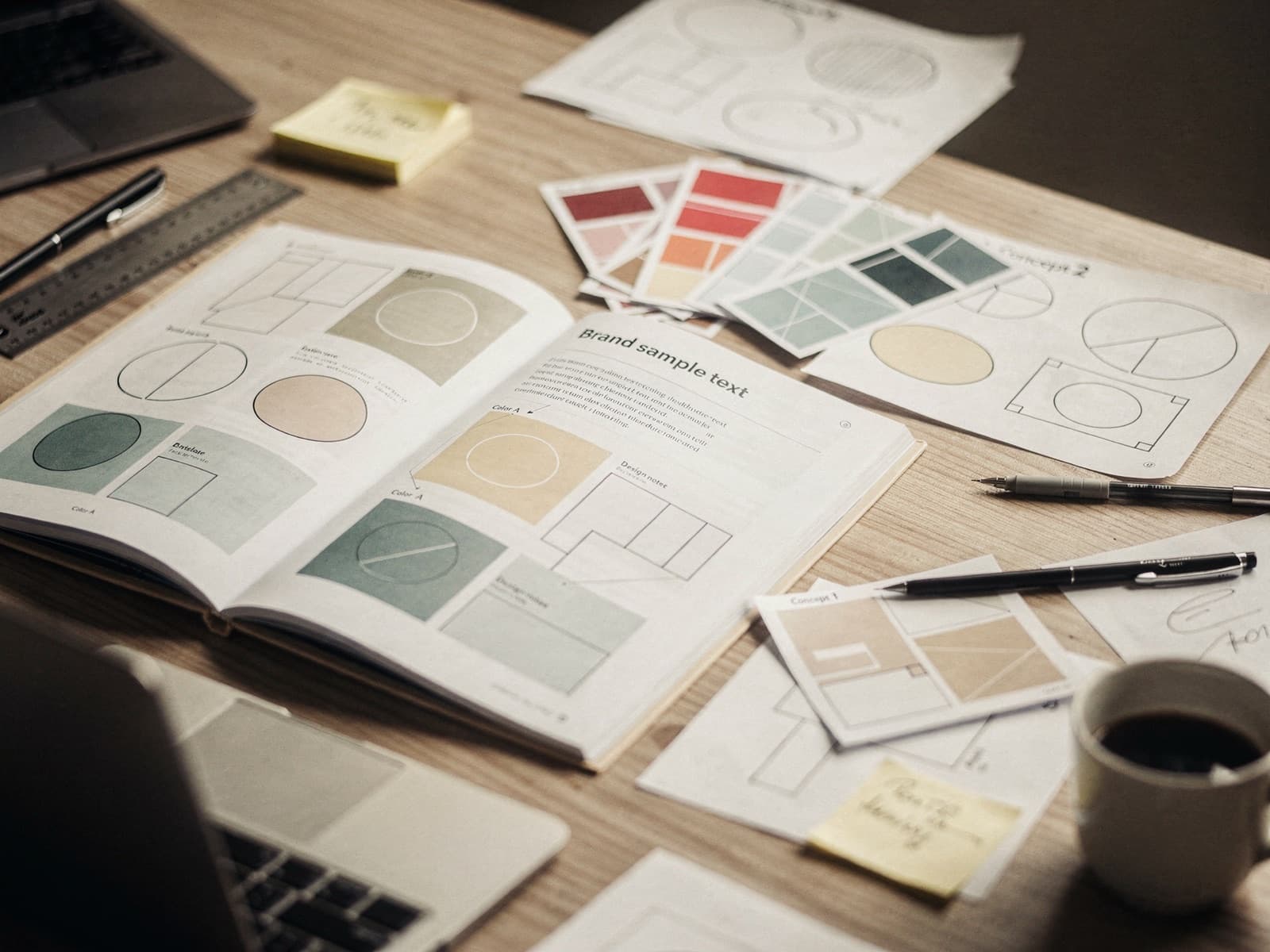
PROWERB develops brand identities for the places customers encounter them: products, shops, marketplaces and packaging. Positioning, design, imagery and copy become usable deliverables, with digital presentation coordinated with print and finishing.
Design is checked against the intended sales surfaces. A shop needs different crops and information from a marketplace listing, while the brand remains recognisable.

Brand identity in the shop

Product imagery and listing content
Existing agencies and studios can contribute design, photography or content. For implementation, we coordinate file versions, usage rights, materials, format and approval. A shared handover connects brand rules to actual production.
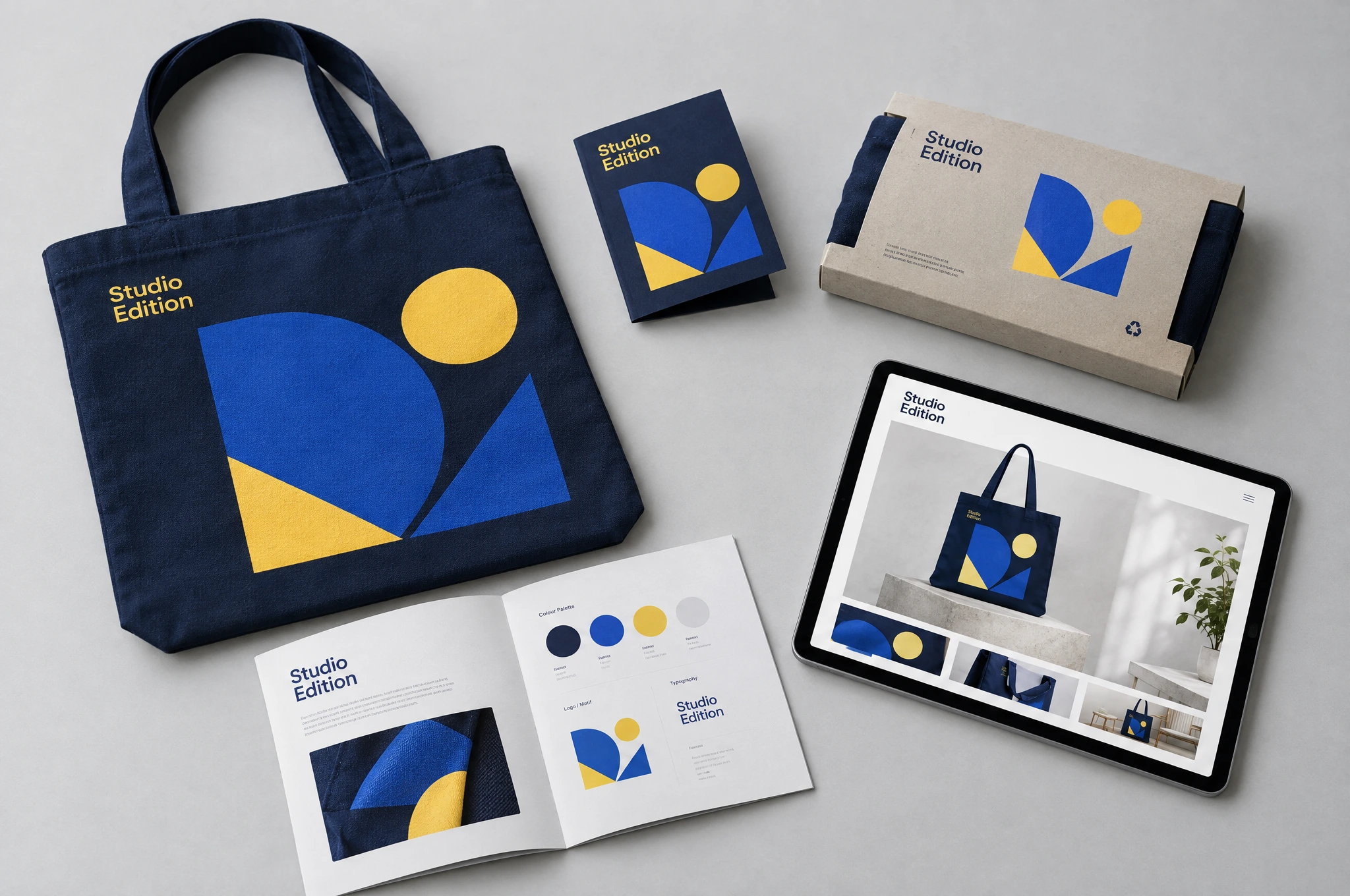
The design example shows a small accessories collection. Its colours and motif appear on a tote, packaging and a product page. Consistency comes from clear rules for imagery, size, placement and contrast.
Each application is checked in its intended use: does the motif fit the print area? Is the product recognisable in the mobile shop? Does the detail photo show the feature described in the copy? The result is a package the shop team and production can actually use.
Check motif, colours and typography on a real product application. The first approval establishes the system for later variants.
Match product cut-outs, details, lifestyle imagery and copy to the required surfaces. Variants receive clear names and an intended use.
Deliver approved artwork, images and copy with version information. Keep samples, shop previews and production approval traceably connected.
The building blocks can be commissioned individually; in delivered projects they run as a package alongside shop build-out and marketing.
The production handover contains approved files, material and format specifications and the responsible contact. Changes after approval are reviewed again; ongoing maintenance follows the agreed channel and version plan.
Two project mandates from the digital-commerce business — an established mid-sized company, a brand without history.
Products, channels, existing assets. What's usable is carried over — only what's missing for sales is newly created.
Design system with application rules for web, listing, print and finishing.
Images and copy per channel, checked against the real templates: shop template, marketplace specs, print data.
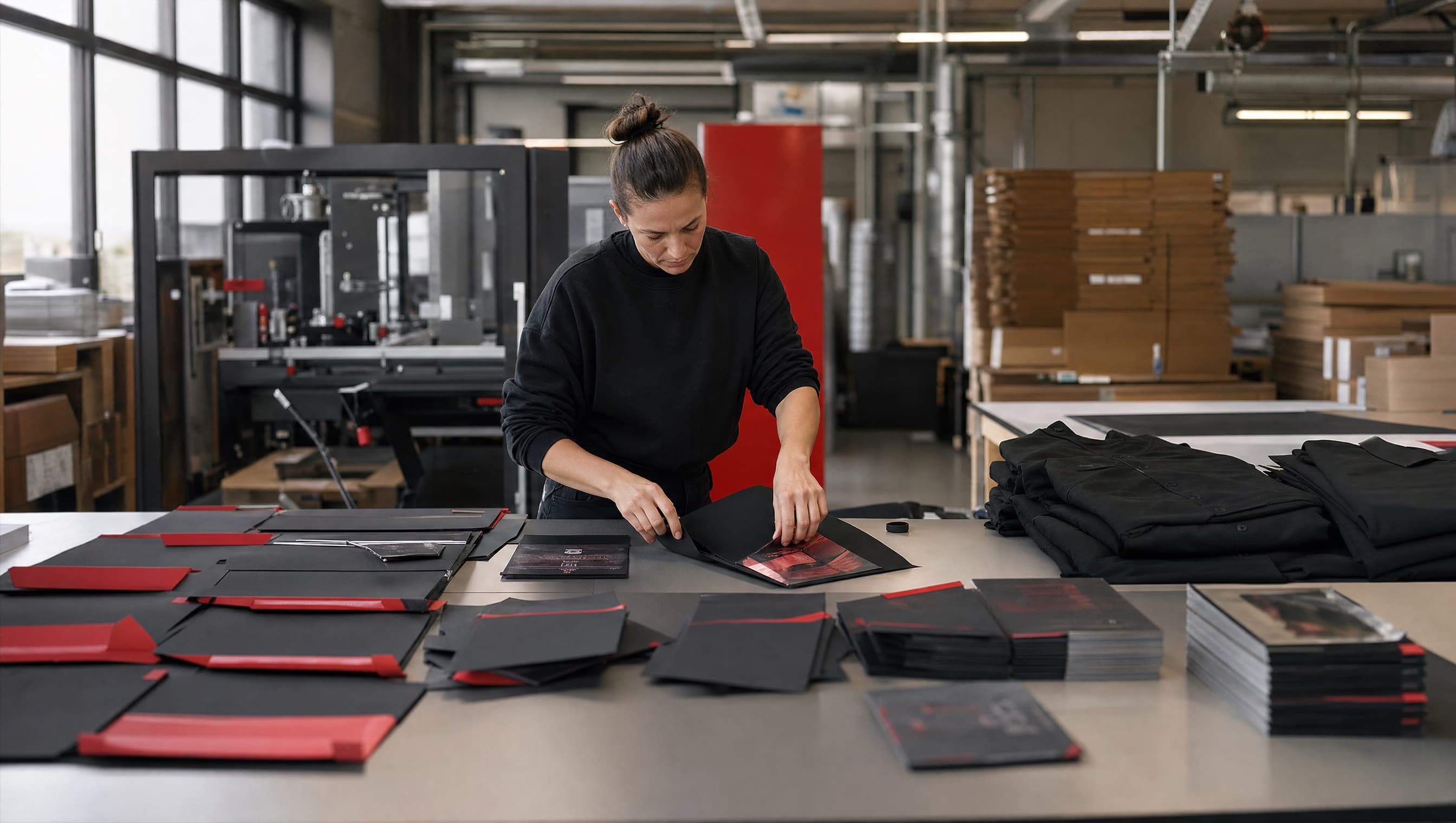
The presence goes into shop, listings and promotional-product production — in the same house, without an agency interface.
New products, new listings, campaigns: the presence grows along, because the operator knows it.
Brand building runs alongside shop, marketing and production in delivered projects. These services interlock:
Existing brand assets, usage rights and channel formats provide the basis for the brief.
Collect brand rules, image rights, product information and production requirements before design starts. Identify missing inputs as explicit tasks.
For every deliverable, define the file, view or sample that receives approval. A design presentation alone is not a production approval.
Yes. Existing design guidelines are adopted and operationalized for the channels: shop, listings, promotional products. Only what's missing for sales is newly built — for example, product images or listing content.
For mid-sized companies without their own marketing production, and for brands in the build-up phase. The delivered range spans from a building-chemistry manufacturer to an audio brand that started at zero.
PROWERB connects design with agreed implementation tasks in shops, content, finishing and logistics. Existing creative partners can remain involved; files, rights and approvals are coordinated together.
Content is produced search-oriented. Campaign management via SEO and SEA is a separate service in digital commerce — in delivered projects it was commissioned together with brand building and content.
Describe what needs to be sold and where. Prowerb responds with a concrete proposal: which building blocks are needed, which can be skipped, and how the presence moves into operations.