Stalled exception handling, opaque inventory, warehouse and shop in separate hands — the reasons for a switch are usually known for a long time. What's missing is a transition without a leap into the void. PROWERB has standardized onboarding into seven phases: inventory, data, systems and shop relocate according to a plan, from a single source. Behind it stand a proprietary tech stack, the newly built warehouse in Kleve with 25,000 square meters, and a family business in its second generation, founded in 1979.
Since 1979 · more than 2M shipments/year · ISO 9001 & 14001 · EcoVadis Silver
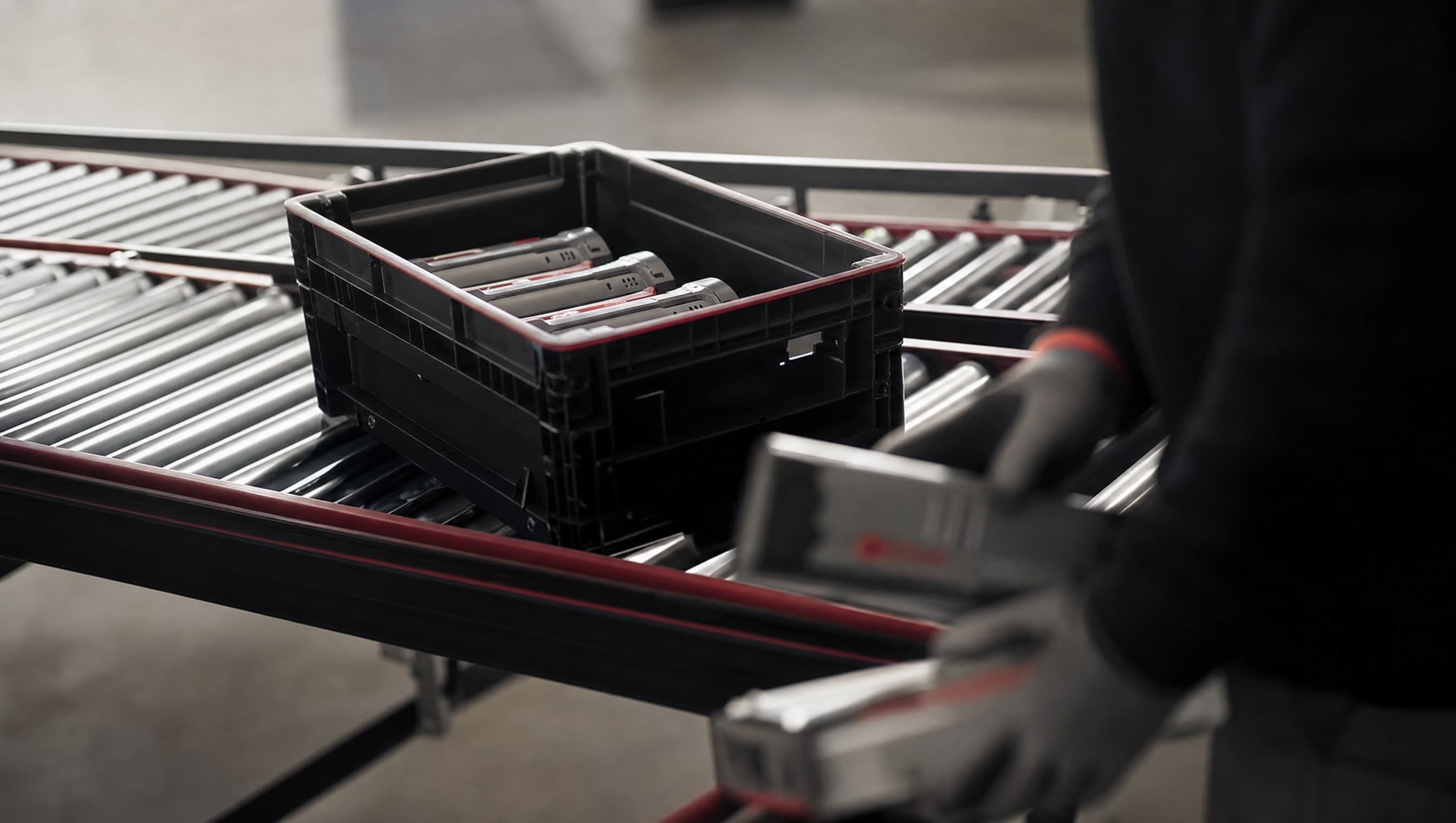
Inventory relocation sounds like risk: goods in transit, data in two systems, orders in no-man's-land. So the switch gets postponed — quarter after quarter, while exception cases pile up. Our answer is unspectacular: a project plan. Seven phases, fixed order, defined go-live. The physical move happens only once master data, contracts and interfaces are in place — not the other way round.
Four building blocks, one plan — from the first data extract to ongoing operations.
For larger fulfillment takeovers, seven phases lead from master data and contracts through systems and stock transfer to go-live. Around 14 weeks is a possible planning framework, depending on assortment, data quality, interfaces, stock availability and approvals. Individual campaigns and digital projects receive their own project plan. See How we work for the complete seven phases. These four checkpoints govern the move:
Export articles, expected stock and open orders at the agreed cut-off; record later changes separately.
Reconcile received and expected stock; document discrepancies and blocked goods separately before releasing available inventory.
Accept the test order, status response and stock reconciliation together; confirm when new orders move to the new process.
Name the decision owner and review time for delays. Parallel operations, residual stock and any fallback procedure are agreed for the project.
For larger fulfillment takeovers, seven phases lead from master data and contracts through systems and stock transfer to go-live. Around 14 weeks is a possible planning framework, depending on assortment, data quality, interfaces, stock availability and approvals. Individual campaigns and digital projects receive their own project plan.
It's delivered, checked against target data at goods receipt and booked into our own ERP/WMS — RFID-capable and in real time. From that moment, every item is booked without gaps.
Dispatch continuity and possible interruptions are assessed in the transition plan. Parallel operations, buffer stock and fallback paths are agreed with you and the previous provider. Cutover follows acceptance; uninterrupted operation is not a blanket promise.
Yes. The MEP platform connects existing eShops as well as ERP and WMS systems.
We are not a mass fulfiller, we are a custom fulfiller: proprietary tech stack of ERP, WMS and the MEP platform, finishing and kitting & assembly in-house, a campaign line for 1 to 15,000 shipments per day with changeover times under three hours.
Three fixed levels: key account management as the strategic point of contact, account management for promotions and campaigns, account management fulfillment for day-to-day operations.
Describe your range, volume and system landscape. You'll get an assessment of what the phase plan looks like in your case — and where the transition gets tricky before it does.
