Amazon Vendor and Amazon Seller describe the two sales models on Amazon. As a Vendor (1P), a manufacturer sells its goods to Amazon via wholesale order; Amazon becomes the owner and controls price and dispatch — access via Vendor Central, by invitation only. As a Seller (3P), the brand sells directly to end customers via Seller Central and retains price and assortment authority; dispatch is handled either by the brand itself (FBM) or by Amazon (FBA).
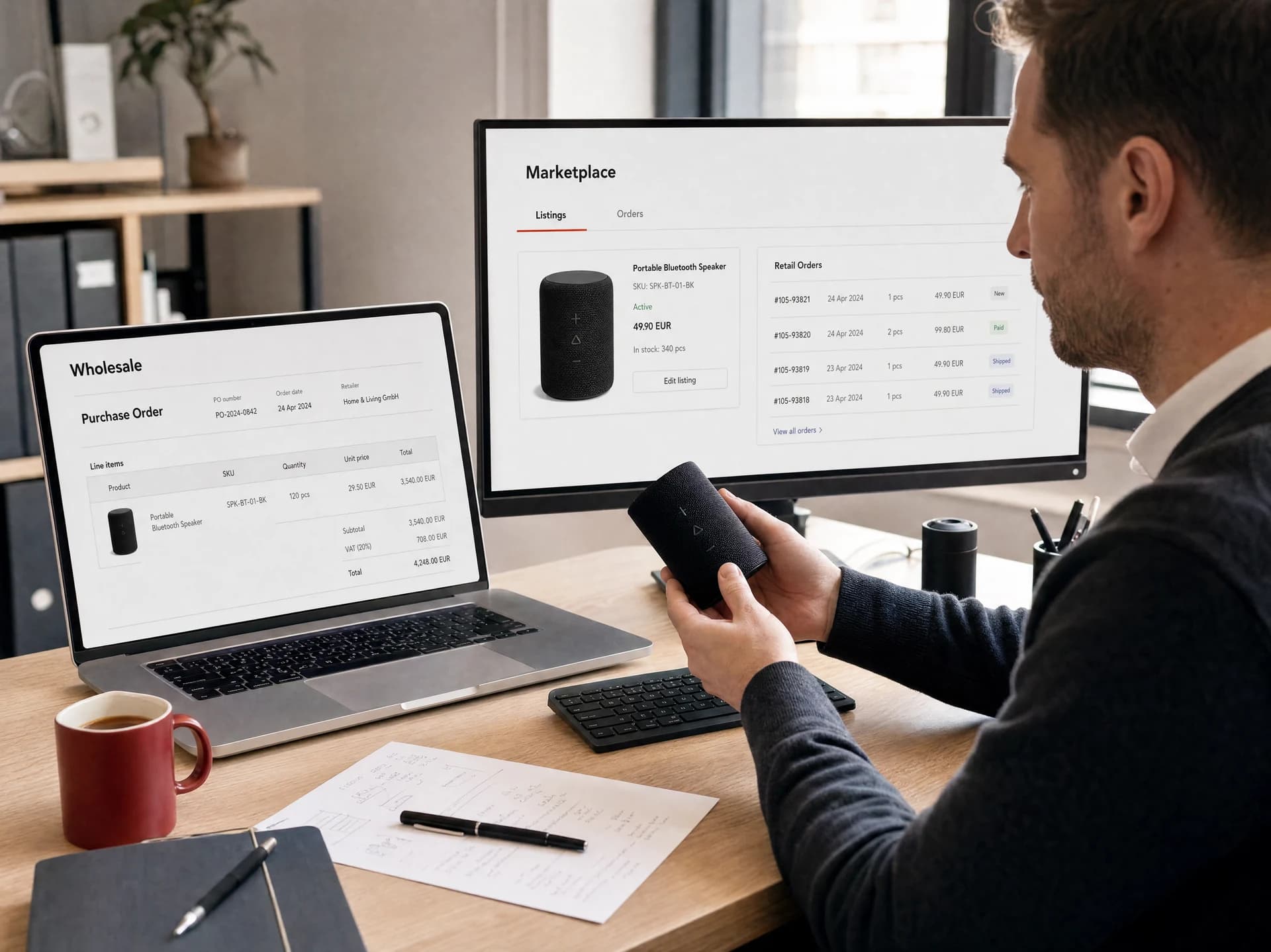
Vendors hand over calculation and end-customer pricing to Amazon and gain reach through the retail program in return. Sellers keep control but bear operations themselves — listing maintenance, inventory management, deals, exception handling, returns processing. Many brands therefore run both models in parallel and need an operation that runs both accounts cleanly.
| Aspect | Vendor (1P) | Seller (3P) |
|---|---|---|
| Seller to the customer | Amazon buys the goods and resells them. | The brand or merchant sells. |
| Retail price | Amazon sets the selling price. | The seller sets its offer and price. |
| Shipping | Amazon dispatches the purchased goods. | Amazon through FBA or the merchant/provider through FBM. |
| Data access | Vendor Central reports within the applicable program. | Order and account data through Seller Central under Amazon’s rules. |
PROWERB operates marketplace accounts as an operator behind the client brand: Vendor Central management including Brand Registry for an international technology group, Seller and FBA business for an abrasives manufacturer — as its own JTL tenant, including Prime Day and Black Friday deals, listing optimization and returns management. For Arizona, PROWERB handles goods dispatch for Amazon and D2C. Marketplace operations and warehouse logistics come from the same source.
Vendor or Seller — the model only decides the entry point. These four terms determine how operations run behind it.
As a Vendor (1P), you sell to Amazon via wholesale order; Amazon becomes the owner and controls price and dispatch — access via Vendor Central, by invitation only. As a Seller (3P), you sell directly to end customers via Seller Central and retain price and assortment authority; dispatch is handled either by you (FBM) or by Amazon (FBA).
Yes, many brands do exactly that: reach through the Vendor program, control through the Seller account. What matters then is an operation that runs both accounts cleanly — listings, inventory, deals, exception handling and returns processing.
Yes. PROWERB acts as an operator behind the client brand: Vendor Central management including Brand Registry as well as Seller and FBA business — including listing optimization, deals for Prime Day and Black Friday, and returns management. For an abrasives manufacturer, the Seller business runs as its own JTL tenant.
Yes — marketplace operations and warehouse logistics come from the same source at the Kleve site. For Arizona, PROWERB handles goods dispatch for Amazon and D2C.
Returns management is part of operations: return of Amazon warehouse stock with inspection, reconditioning and restocking. That keeps inventory usable instead of written off.
The model decides margin, price authority and data access — the answer depends on your assortment and sales channel, not a blanket recommendation. In the non-binding Needs Check (under 60 seconds), we clarify the starting point and account structure.
