Textile finishing refers to the subsequent application of designs, logos or lettering to finished textiles — using methods such as screen printing, transfer printing, embroidery, flocking or direct-to-garment printing. It starts where textile production ends: the shirt already exists, and finishing turns it into corporate fashion, merchandise or campaign goods. Textile printing is only a subset — embroidery and flocking apply material rather than print. Which method works is decided by run size, material and design.
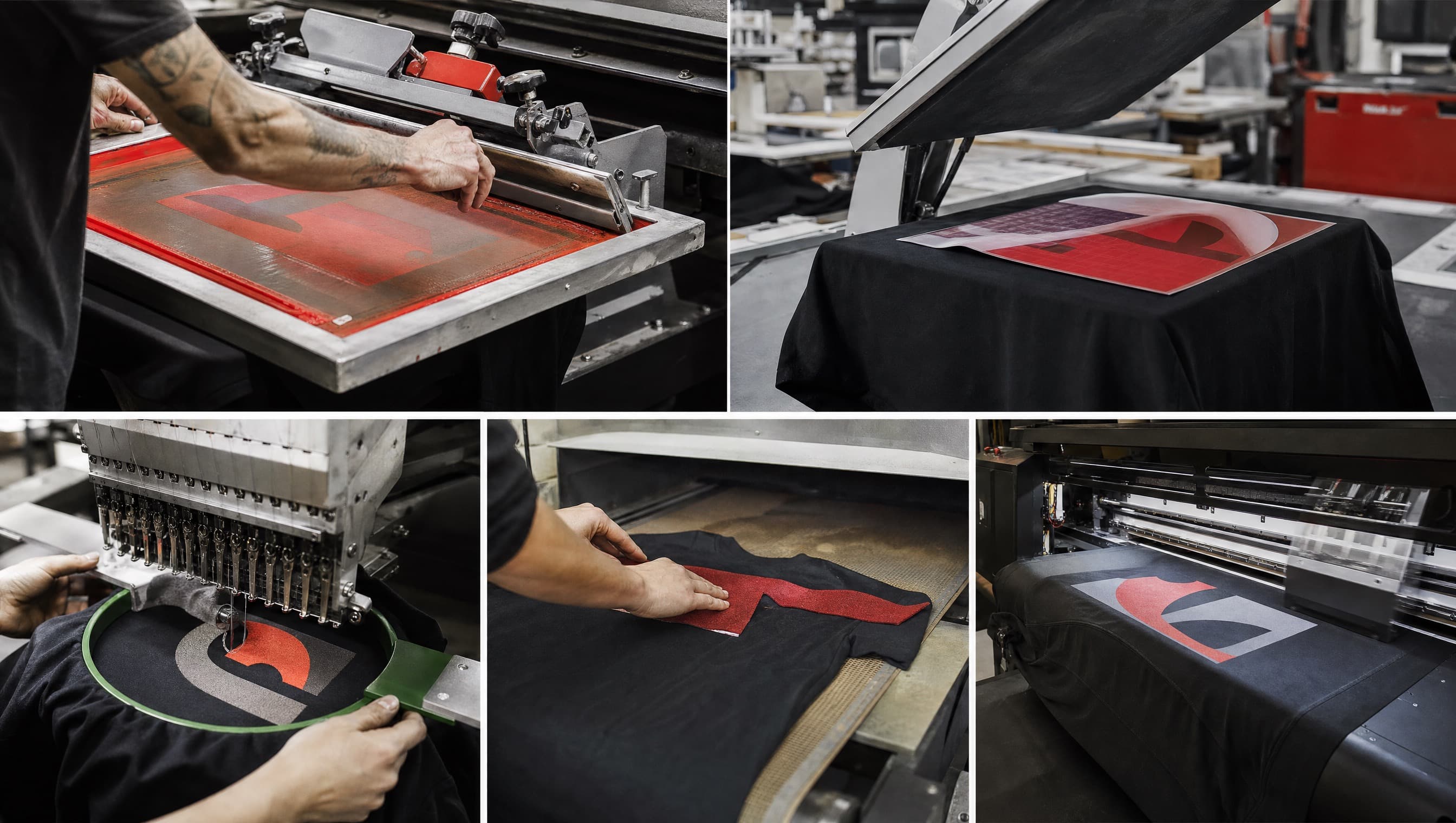
Anyone procuring textiles decides the outcome with the finishing method: screen printing pays off at high volumes and large-format designs, embroidery creates a raised textile surface, transfer printing stays flexible for small quantities and individual names, direct-to-garment printing reproduces photorealistic designs, flocking delivers raised, velvety surfaces.
The wrong choice shows late — as a design peeling off after the third wash, or as a unit price that blows the campaign budget. The logistics question also matters: finished goods have to be stored, picked and shipped. Anyone who awards finishing and logistics separately builds an interface that both sides have to manage.
Suitability for industrial washing depends on the garment, thread or print material, process and agreed care conditions, and is checked for the specific product.
| Process | Artwork | Fabric check | Typical quantity |
|---|---|---|---|
| Screen printing | Solid, repeated artwork | Match fabric and ink system | Runs with the same artwork |
| Transfer printing | Names, logos and changing variants | Check heat tolerance and fabric | Single items through series |
| Embroidery | Logos and lettering with texture | Check fabric, thread and stitch density | Single items through recurring series |
| Flocking | Lettering and clear shapes, velvety finish | Check adhesion and care | Personalisation and smaller runs |
| Direct-to-garment | Detailed, multicolour artwork | Check fibre, pretreatment and ink | Small to medium artwork runs |
PROWERB finishes textiles in-house using five methods: flocking, screen printing, transfer printing, embroidery and direct-to-garment printing. For series production, 30 transfer presses stand in a row. The finished goods go directly into stock — storage, shop connection and dispatch continue without a change of provider.
Four terms from the same environment:
Run size, material and design decide. Screen printing for high volumes and large-format designs, embroidery for a high-quality look and wash resistance, transfer printing for small quantities and personalization, direct-to-garment printing for photorealistic designs, flocking for raised, velvety surfaces.
Yes, all five methods — flocking, screen printing, transfer printing, embroidery and direct-to-garment printing — run in-house. For series production, 30 transfer presses stand in a row.
Textile printing is a subset of textile finishing. Finishing also covers embroidery and flocking alongside the printing methods — techniques that apply material instead of printing ink.
Yes, at PROWERB finished goods go directly into stock. Storage, ordering via the promotional-products shop and dispatch follow without a change of provider — the interface between finishing and logistics disappears.
