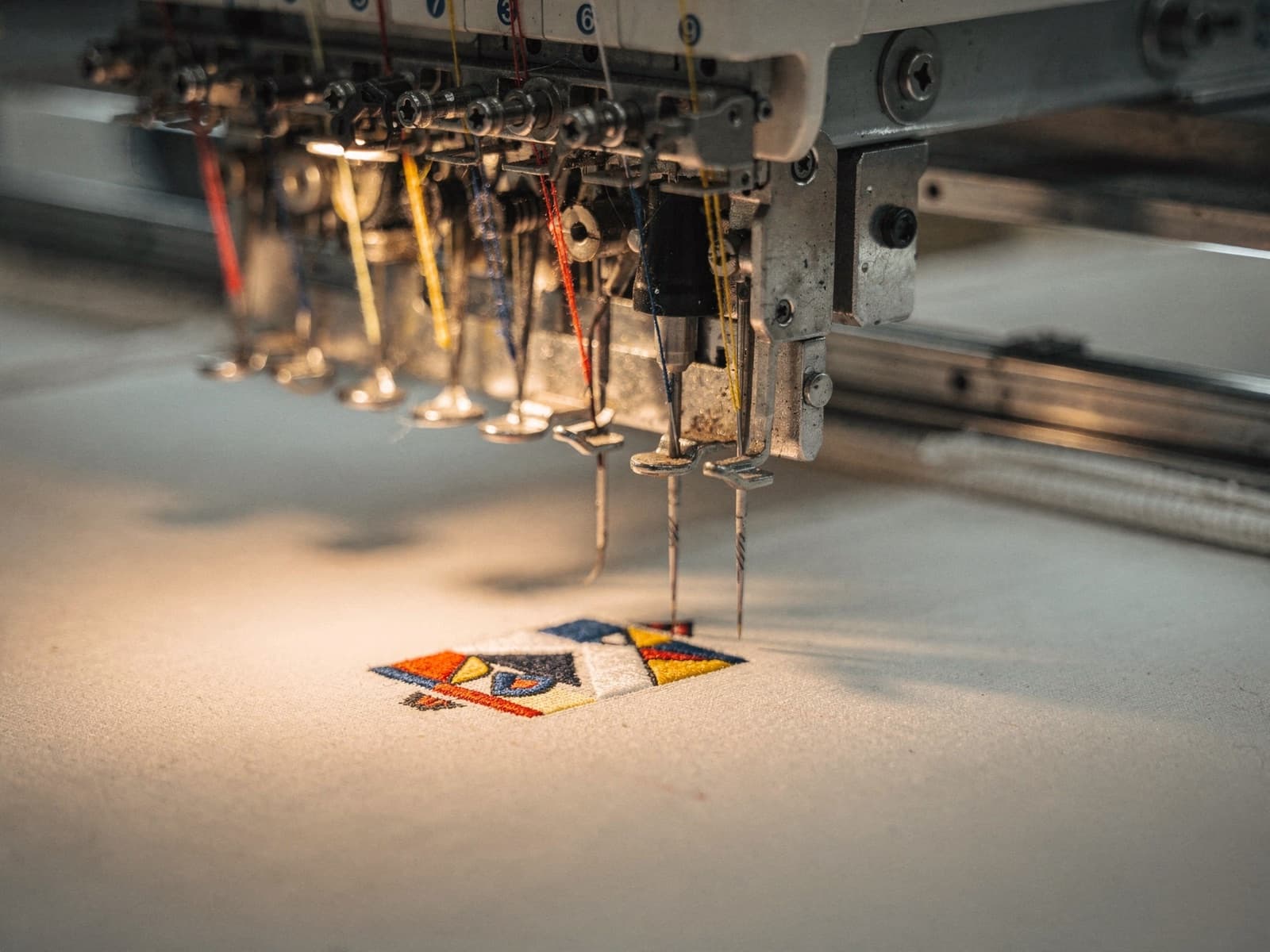
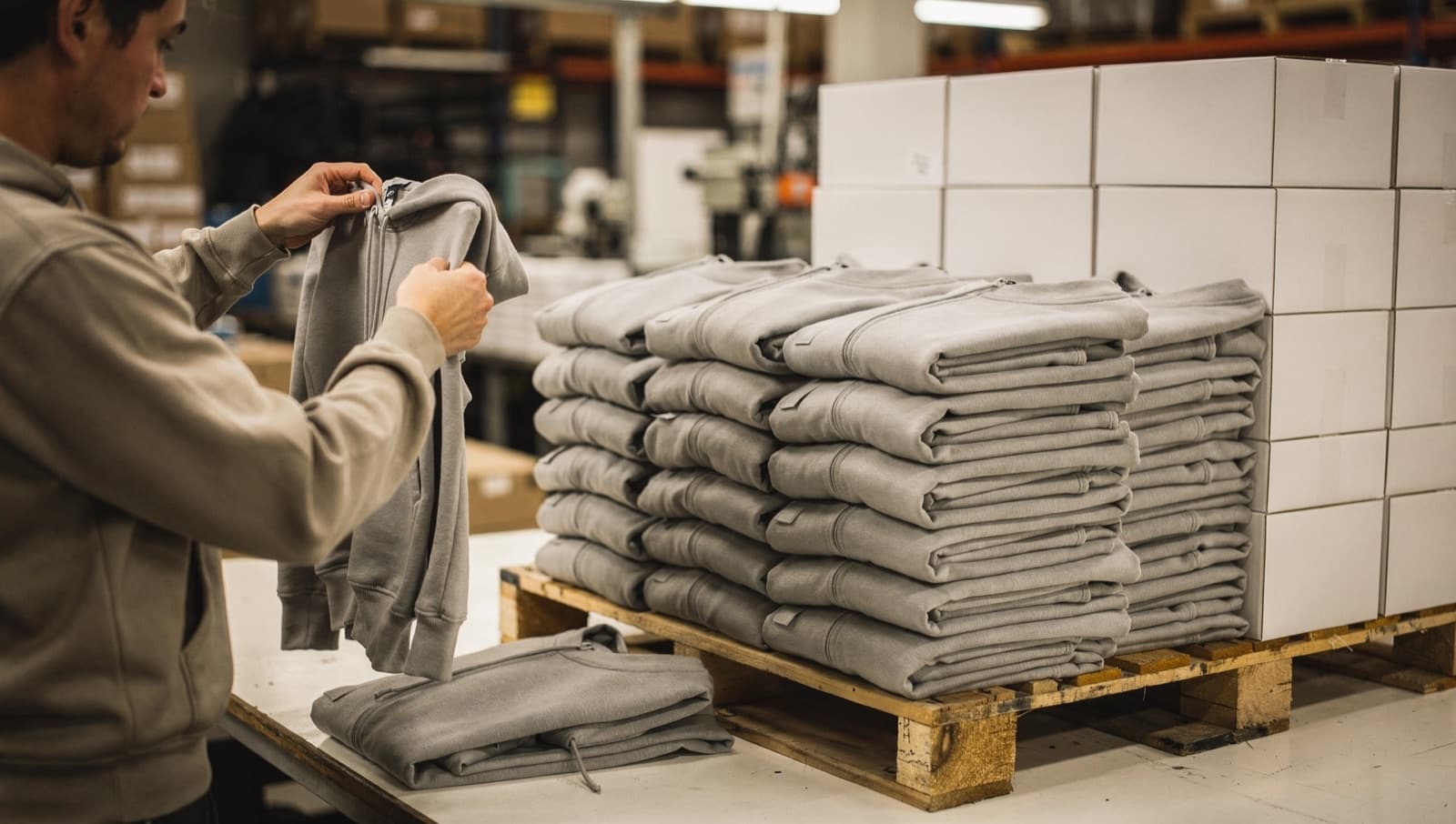
For textile and finishing projects produced in-house, we make samples using the intended process and material. Flocking, transfer printing, embroidery, screen printing and direct-to-garment printing are available. For packaging, sets or sourced components, we agree the sampling process with everyone involved. Approval records the agreed reference for production.
Since 1979 · more than 2M shipments/year · ISO 9001 & 14001 · EcoVadis Silver
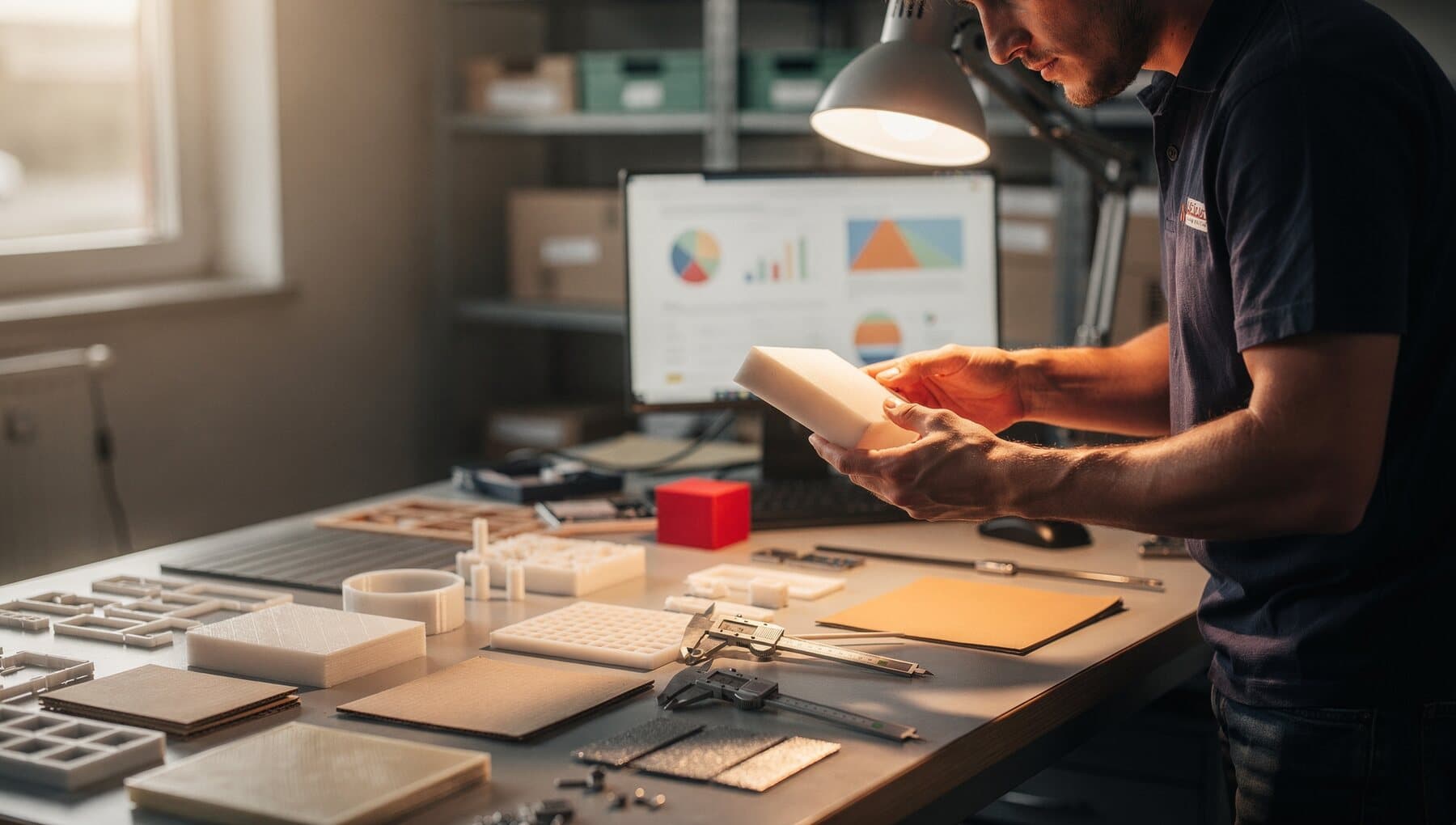
A rendering shows the artwork; a sample shows its effect on the material. We check colour, embroidery, positioning and workmanship on the object. Whether the sample is made in the lab or coordinated with a supplier depends on the item and process. Data revision, sourcing, correction rounds and approval date are agreed in advance.
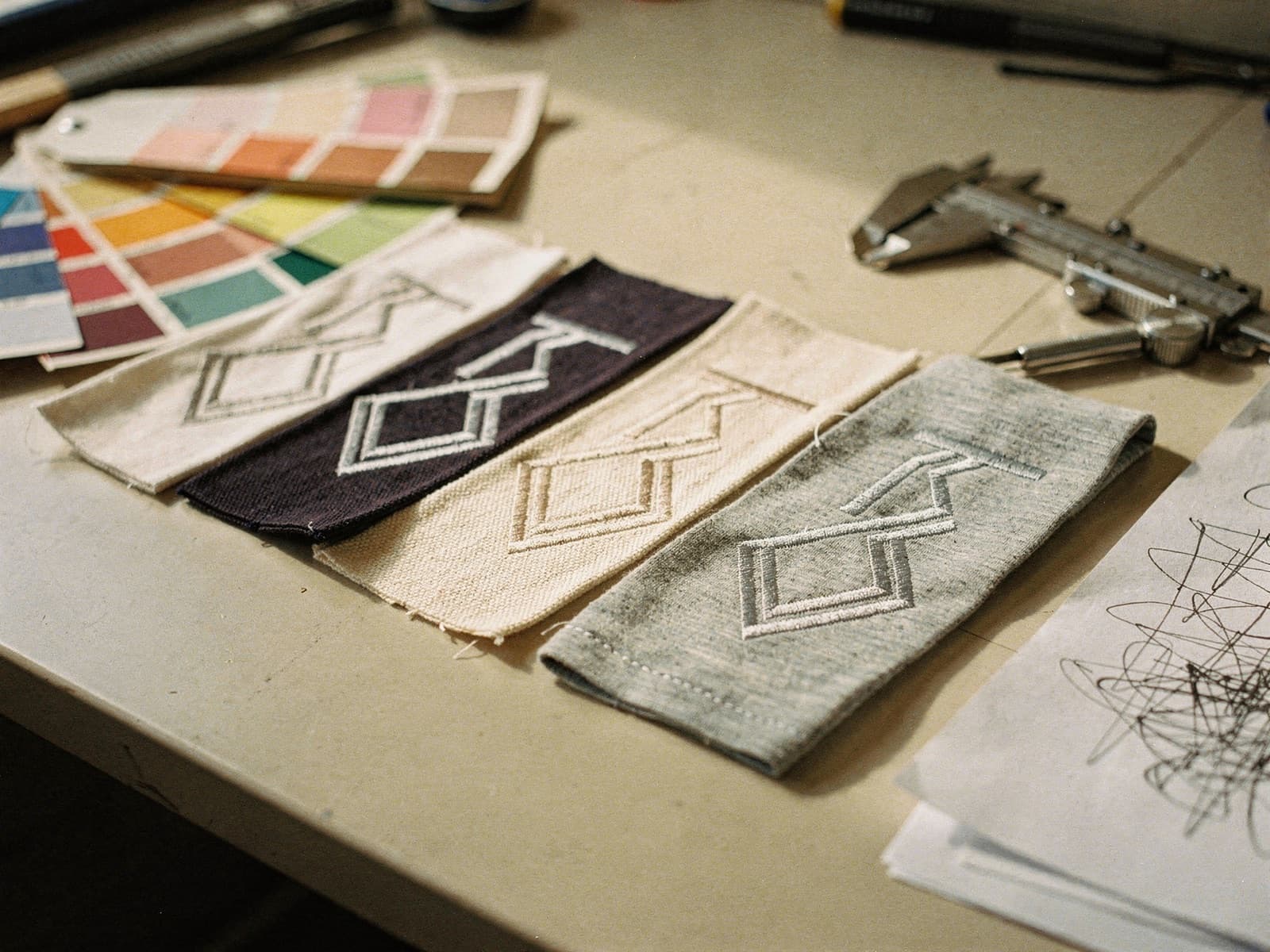
Textile and finishing samples use the agreed production process and intended material. Functional, packaging and set prototypes each have a specific test objective. The approved sample becomes the reference for subsequent production.
What's approved in the Lab goes into production without translation loss. Mass printing of clothing at PROWERB runs in a row — thirty transfer presses side by side, plus modular finishing cells on a goods-to-person model. Kit and assembly inventory is managed through bills of materials in our own ERP and WMS, with every finished kit booked with accurate inventory records. And when a sample turns into a campaign: the campaign line is set up in under three hours and produces from small runs to large-scale campaigns. Since 2024, a dedicated business unit has bundled the promotional-products and print business; production takes place at the Kleve headquarters, joined since 2025 by the Promotional Products Hub in Dortmund.
For Arizona, PROWERB partly sources the textiles and finishes them in-house — product highlights like hoodies or flip-flops regularly generate demand spikes, supplied to Germany and Benelux including Amazon and D2C dispatch.
For flaschenpost, we produced carton designs and mixed-drink crates, distributed via the central warehouse and directly to the hubs. And Erdinger draws on our support for product launches: kitting of product add-ons, from the small giveaway to FTL scale, delivered directly to retail and grocery-retail central warehouses.
Sampling, production and logistics connect directly for our in-house finishing processes. For sourced components, we agree the approval and handoff process with the supplier.
Item, motif, material, target quantity: it starts with consultation — the first stage of the same chain that later handles sourcing, finishing and dispatch.
The motif is applied in the target process on the target material. If several processes are candidates, variants are made in parallel.
The sample goes into your hands. Color, feel and finish are decided on the object — corrections flow into the next sample, not into the running series.
The approved standard becomes the reference for series production. Bills of materials in our own system keep inventory consistent; the same building then handles warehousing, pick & pack and dispatch.
Flocking, transfer printing, embroidery, screen printing and direct-to-garment printing — the same processes PROWERB uses for series production. Which process fits material and motif is clarified in the briefing; an overview is on the Materials & Finishing page.
The sample is a decision tool, not a minimum order. The larger the planned series, the smaller the sample's share of total cost — and the more expensive the error it prevents. Concrete terms belong in the briefing.
That depends on item, material and process. Because sample building and series production sit under the same roof, the shipping and coordination loops that stretch out supplier samples fall away. PROWERB names a binding date in the briefing.
The approved standard becomes the reference for the series: sourcing, finishing, kitting & assembly and fulfillment continue under the same roof, managed through bills of materials in our own ERP and WMS.
Yes. Carton design is part of the service scope — for flaschenpost we produced cartons and mixed-drink crates. For campaigns, the reference kit is built before the line is set up; the production-readiness check is a fixed part of the process.
Send the item idea, artwork and target quantity. We propose a process, sampling route and test criteria, and agree which steps take place in-house and which involve suppliers.