Delivered components need to become an approved sales unit, a stocked display or a campaign ready for dispatch. PROWERB combines the bill of materials, assembly or packaging, finishing, inspection and inventory booking. Quantity, manual operations and material determine the appropriate line.
Since 1979 · negative corporate CO₂ balance · ISO 9001 & 14001 · EcoVadis Silver
Co-packing is first a booking problem: a set is a new article. Anyone turning three components into one sales unit has to book three withdrawals and one addition — otherwise inventory only checks out on paper. When goods leave the warehouse for a contract packer, they become a set there and come back.
Inventory is blind between the handovers. PROWERB does kitting & assembly within its own warehouse operations: goods stay in-house; withdrawal of components and addition of the finished set run through bill-of-materials and value-added processes in the WMS — booking-consistent, in real time, RFID-capable.
PROWERB handles the complete kitting & assembly chain: from the bill of materials through production to distribution. Warehouse, kitting & assembly and dispatch sit within the same operation — no detour via a second facility.
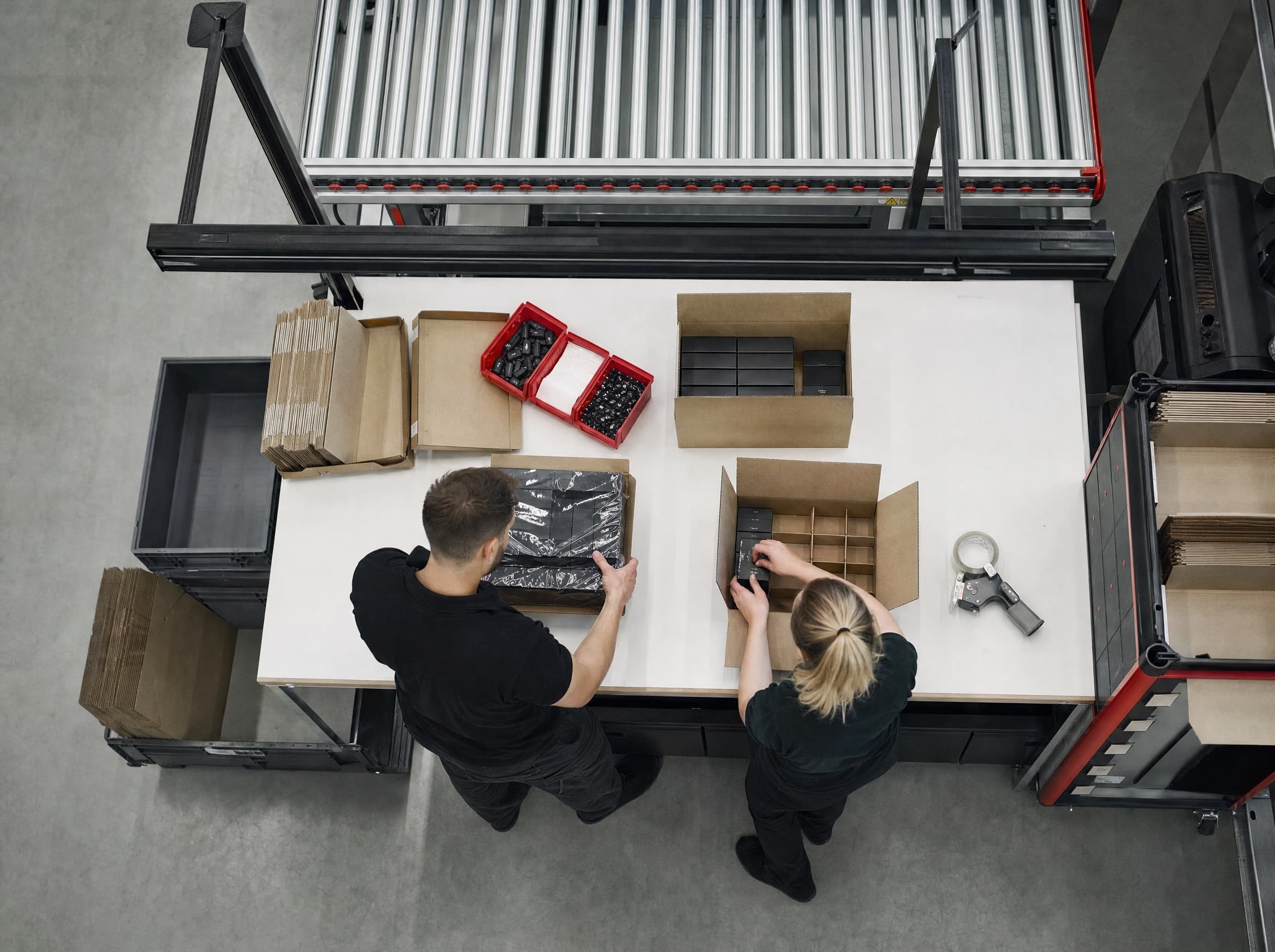
Ongoing orders can be handled within the fulfilment flow; scheduled campaigns are prepared on an appropriate campaign line. Co-packing includes packaging work, product inserts and display stocking as well as kits. Throughput and changeover are planned for the bill of materials, materials and inspection scope.
The process is documented and starts with data, not goods — so the line is ready before the first pallet arrives.
The set is set up as a bill of materials in the system. Shipment lists and delivery notifications arrive via the online tool, the MEP platform, or SFTP file transfer.
Components come from existing inventory or arrive just in time for the campaign. Every addition is booked in at goods receipt.
Staff scheduling and setup in under three hours. Process engineering verifies the setup, the production-readiness check clears the line.
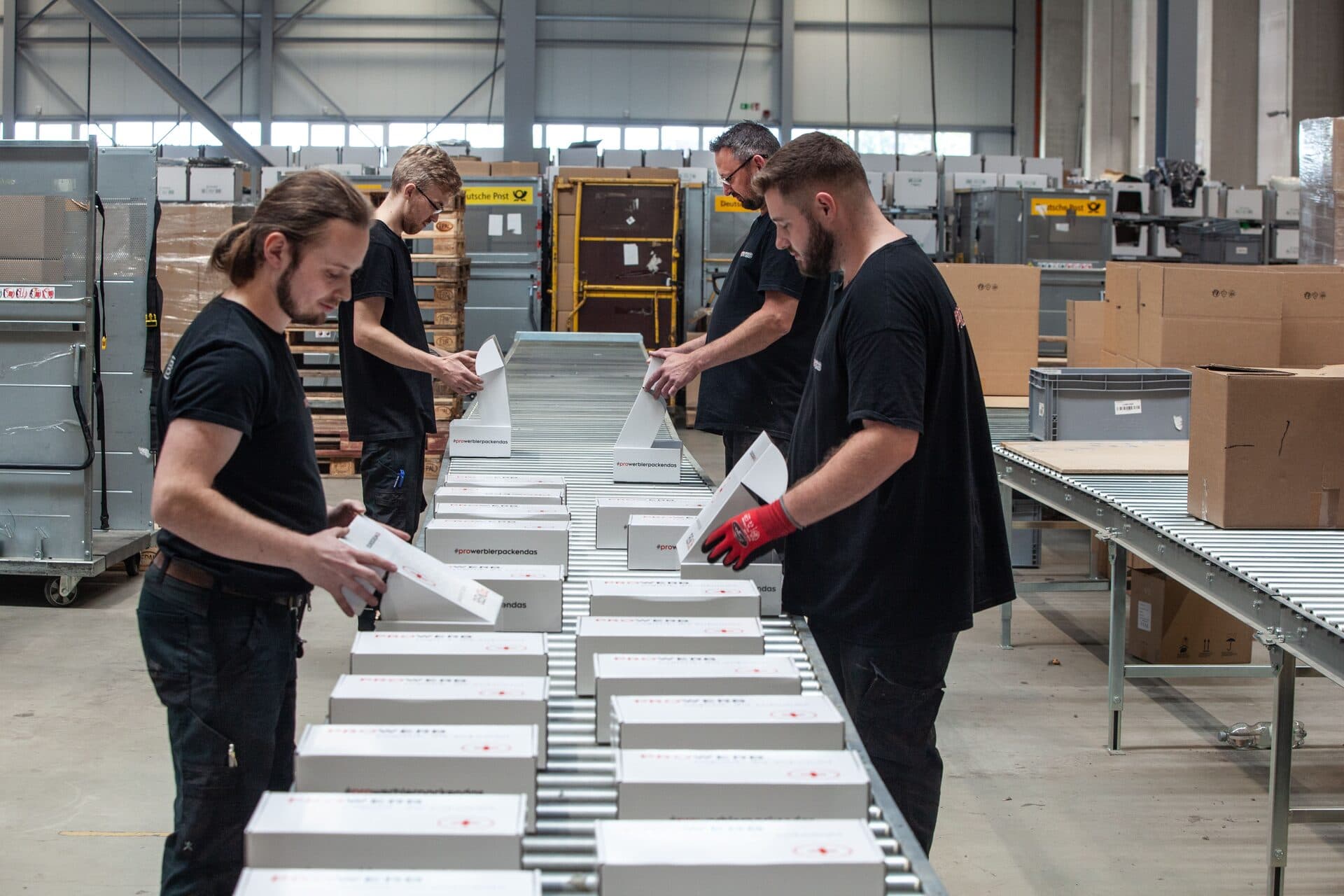
Kitting sets, stocking displays, co-packing — at modular cells or on the campaign line, depending on the order.
Final inspection and labeling. Every unit is checked before moving into staging.
The finished set enters inventory as its own article, distribution to retail, hospitality or end customers begins — track & trace and inventory development in the Operations Cockpit, around the clock.
The densest cadence is in the beverage sector — there, kitting & assembly is often the core of the partnership. These peak figures refer to baseline output: 200% is double, 400% is fourfold (+300%). Achievable volume and lead time are agreed for the item mix, goods and data availability, staffing and shift plan.
Before the set comes warehousing and finishing, after it comes dispatch and the campaign. Adjacent services:
Sets, product add-ons, mixed crates, sample packs, display stocking and prize packages — from order-based kitting & assembly within ongoing fulfillment to large campaigns on the campaign line, including distribution to retail, hospitality and end customers.
The campaign line is designed for 1 to 15,000 assemblies per day. During peaks, capacity scales to 200 percent of baseline capacity within 24 hours and to 400 percent of baseline capacity within 72 hours — via the flex-staff pool and shift extension.
Via bill-of-materials and value-added processes in PROWERB CORE, the proprietary ERP and WMS: withdrawal of components and addition of the finished set are booked in real time, RFID-capable and gapless.
No. Components come either from existing inventory or just in time for the campaign — shipment lists and delivery notifications are imported in advance via the online tool or the MEP platform.
Yes. Flocking, transfer printing, embroidery, screen printing and direct-to-garment printing run in-house, with bulk apparel printing on transfer presses in a row. For Arizona, PROWERB sometimes also handles procurement of the textiles.
The changeover time for a campaign switch is under three hours. Before the start, process engineering verifies the setup, and the production-readiness check clears the line.
Components, quantity, deadline, destination — that's all the first briefing needs. After that, you'll know which line your kitting & assembly runs on and when it starts.