Purchased goods, purchased finishing, purchased transport — whatever a service provider moves for your brand appears as an upstream emission in your balance. That's why choosing the operator is a balance-sheet decision. PROWERB runs procurement, finishing, kitting & assembly, warehousing and dispatch under one roof — and operates with a negative CO₂ balance. In Kleve since 1979.
Read the Sustainability Report 2025 (energy comparison) →Read on →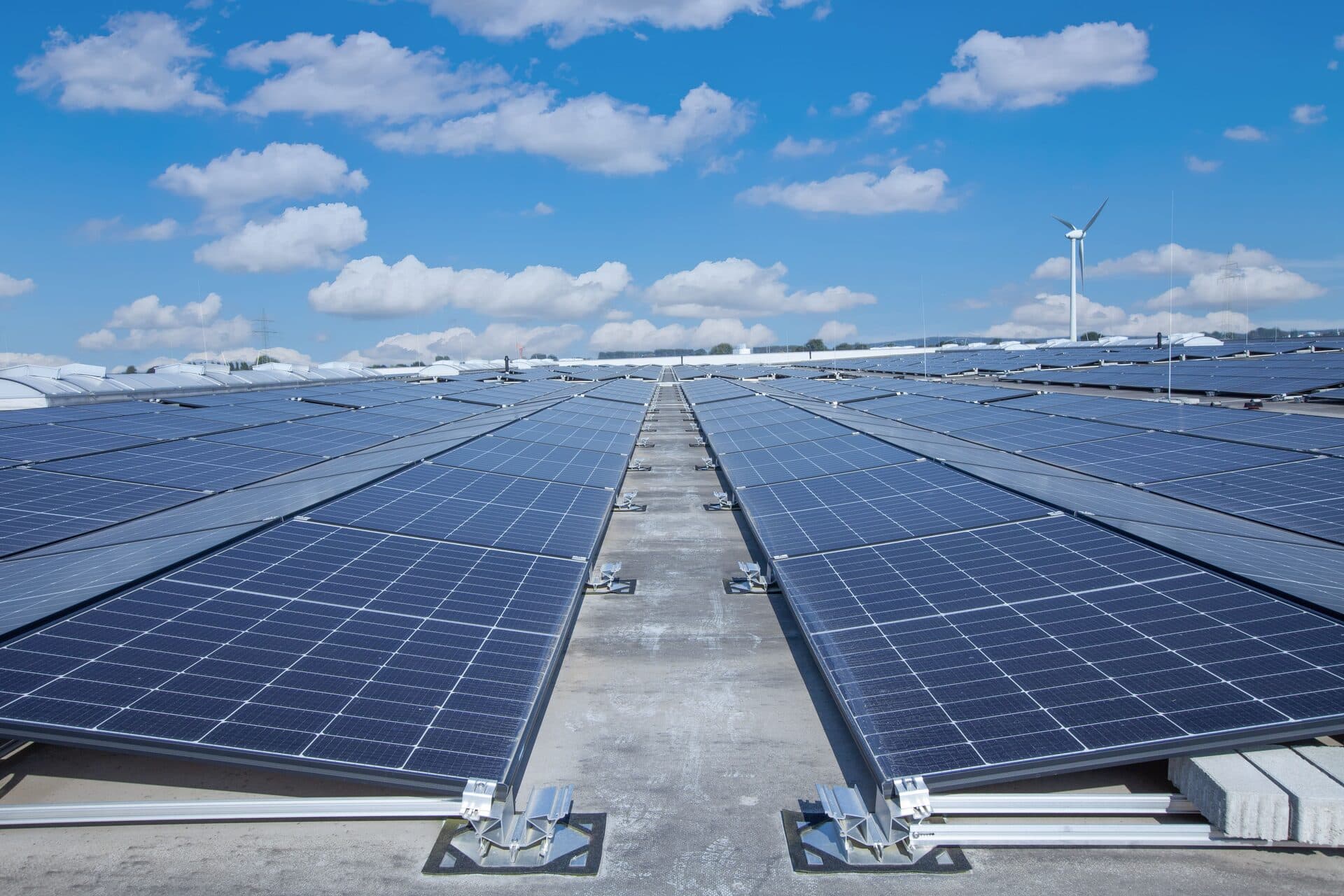
Since 1979 · negative corporate CO₂ balance · ISO 9001 & 14001 · EcoVadis Silver
The reporting and due diligence duties applying to your company depend on the current scope and your circumstances. CSRD and supply-chain requirements are changing; your responsible specialists determine the applicable standard. PROWERB provides agreed operational and supplier data. This does not automatically fulfil your reporting obligations.
Sustainability in kitting & assembly and logistics isn't decided in a mission statement — it's decided in the structure of the operation. Four structural features pay directly into your upstream chain.
Energy comparison · Report 2025
Energy purchases916,334 kWh
PV generation926,816 kWh
10,482 kWh above purchases
PV use926,816 kWh
This view shows the kWh values from the 2025 Sustainability Report. It describes the site-level comparison, not a blanket balance for individual customer deliveries.
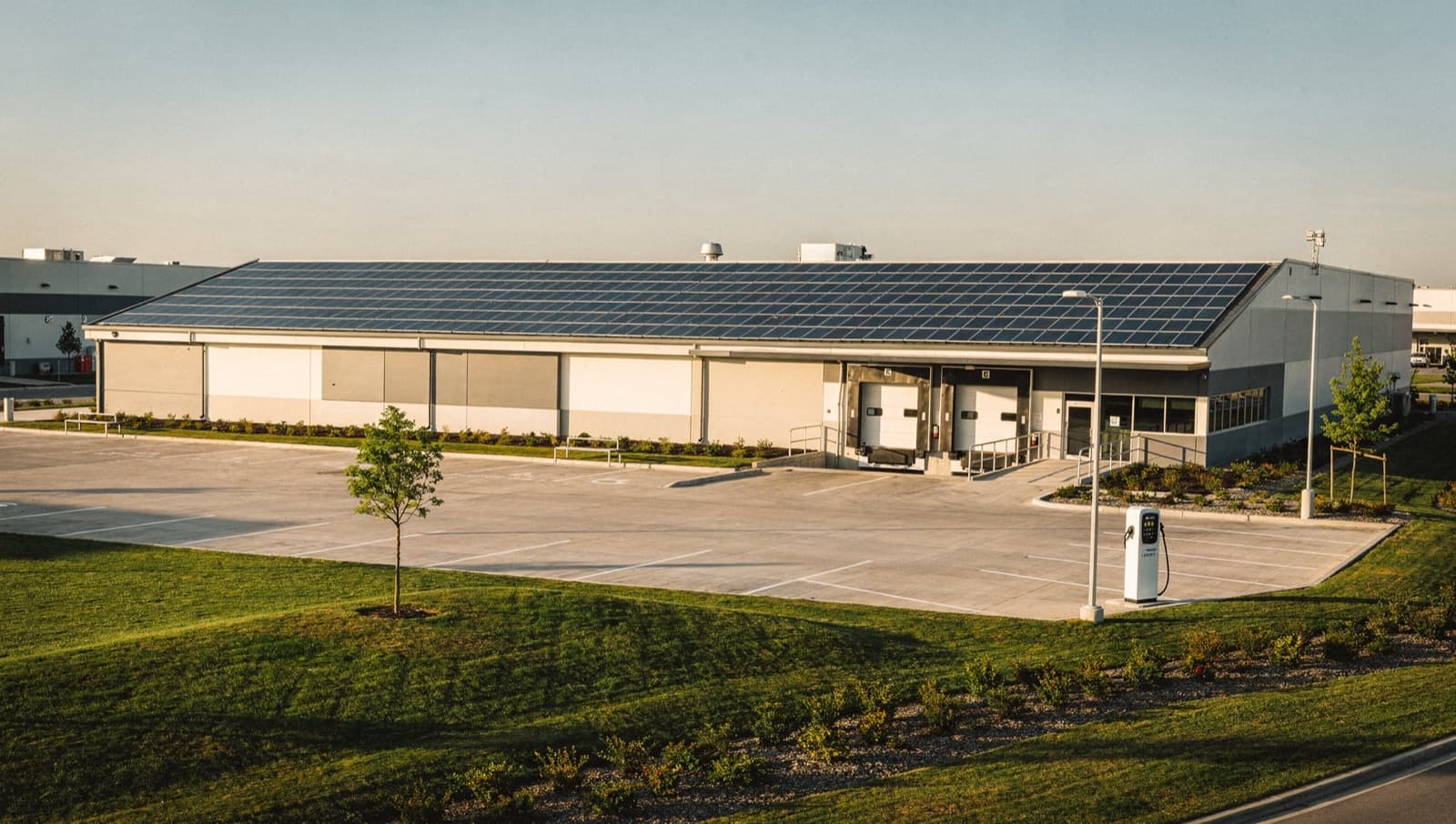
At PROWERB, kitting & assembly and fulfillment share the same location: finishing, warehousing and dispatch come together in Kleve, with operational sites in the Lower Rhine region and the Ruhr area. Environmental and social responsibility are anchored as pillars in the management system — with recurring supplier evaluation in procurement, a whistleblower portal and an external data protection officer in governance. In the events business, circular logic is everyday practice: equipment is delivered, set up, retrieved, reconditioned and stored for the next use.
PROWERB actively operates climate-positive. The 2025 Sustainability Report compares 916,334 kWh of energy purchases — 243,582 kWh electricity and 672,752 kWh gas — with 926,816 kWh of PV generation: 10,482 kWh more PV generation than energy purchases. Of this, 60,940 kWh was used on site and 865,876 kWh fed into the public grid. This is a site-level comparison, not a blanket negative factor for your individual shipments or Scope 3 calculation.
Allocation requires an agreed service, period, data source and inventory boundary. Larger fulfilment takeovers follow the documented seven-phase onboarding; data or reporting questions need their own appropriate work plan.
Which promotional products, which finishing stages, which chain of service providers today: we expose where intermediate transports and duplicate structures generate emissions and audit effort.
Connected tasks are coordinated. Manufacturers, carriers and other participants remain part of the supply chain and its review according to their actual contribution.
For a larger fulfilment takeover, introduction follows seven phases (0–6). Around 14 weeks is a planning guideline once master data, contracts, inventory transfer, interfaces and approvals are settled. A digital build or smaller scope receives its own schedule.
Real-time inventory management, round-the-clock reporting, recurring supplier evaluation. The operation documents itself as it runs — your department gets data instead of statements of intent.
Under the GHG Protocol, Scope 3 covers a company's upstream and downstream emissions — including purchased goods and services as well as transport. Promotional products are purchased goods, their finishing a purchased service, their dispatch purchased transport. All three items appear in the client's balance sheet.
The operation's CO₂ balance is negative — PROWERB actively operates climate-positive. The 2025 report compares 916,334 kWh of electricity and gas purchases with 926,816 kWh of PV generation at the site; 60,940 kWh was used on site and 865,876 kWh fed into the grid. It does not establish a blanket negative balance for every customer delivery.
A certified QM system with production and quality control, recurring supplier evaluation and monitoring, and a whistleblower portal. Which documents your audit specifically needs, we clarify in the briefing.
We supply the operational data from ongoing operations: inventory trends, shipment data, track & trace — retrievable via the Operations Cockpit and integrable into customer systems. Assessment and reporting remain with you and your auditors. We provide the foundation, not the certificate.
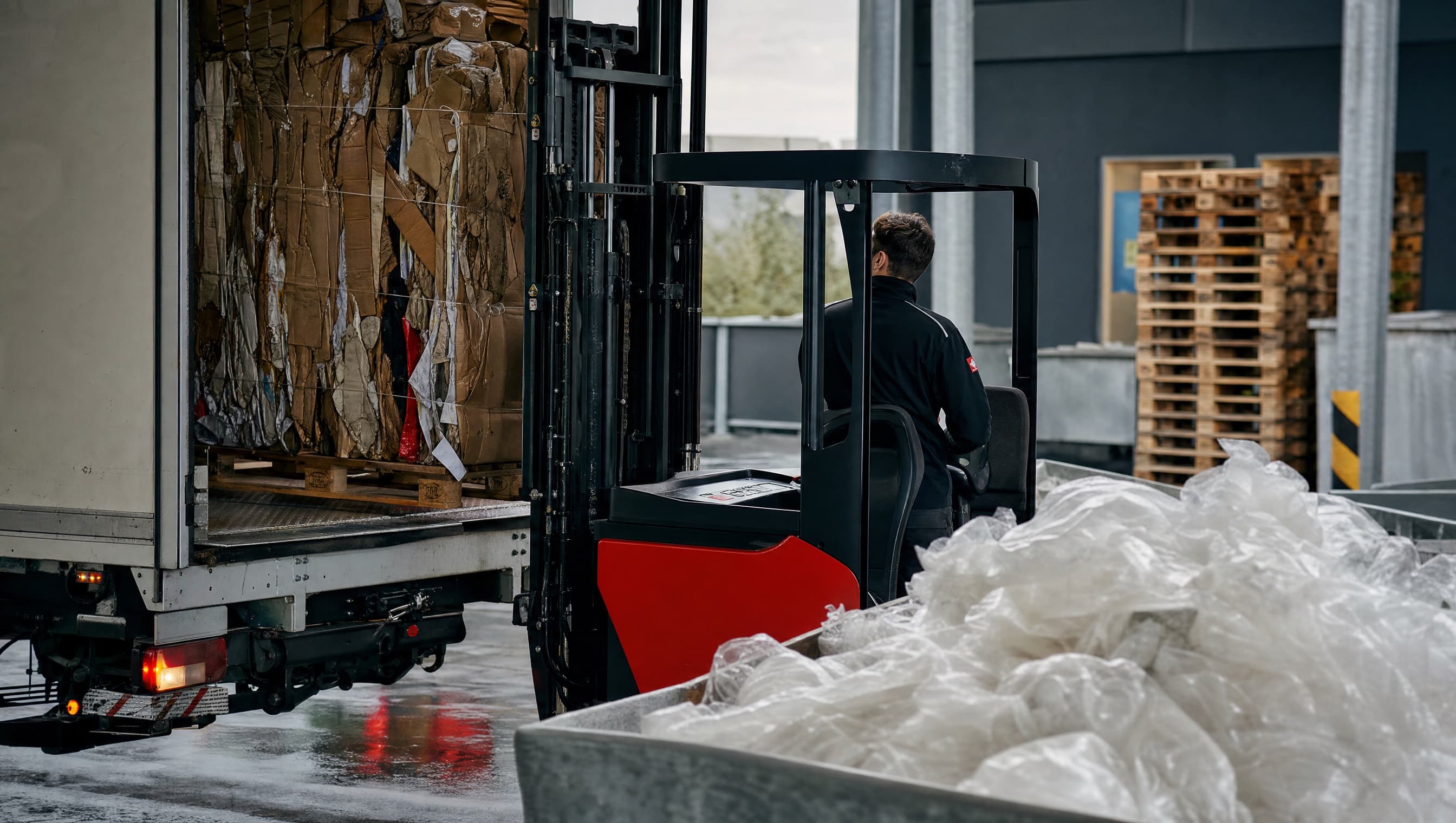
It comes back. Reverse logistics with refurbishment and an in-house rental pool ensure that equipment is reconditioned and reused — instead of being newly produced for each campaign and then discarded.
Describe your range, finishing stages and dispatch volume. We'll show you what consolidation, reuse and a climate-positive operation change in your upstream chain.