Many marketing departments run their own promotional-products logistics: a storage room, a shelving system, a colleague who handles dispatch on the side. In ongoing operations, that works fine. The bill comes with the campaign — when a handful of parcels a week turns into a wave of orders. This page compares both models along the criteria that matter in operations, not in a pitch. And it names the case where inhouse remains the right answer. The cost logic for that sits under Pricing.
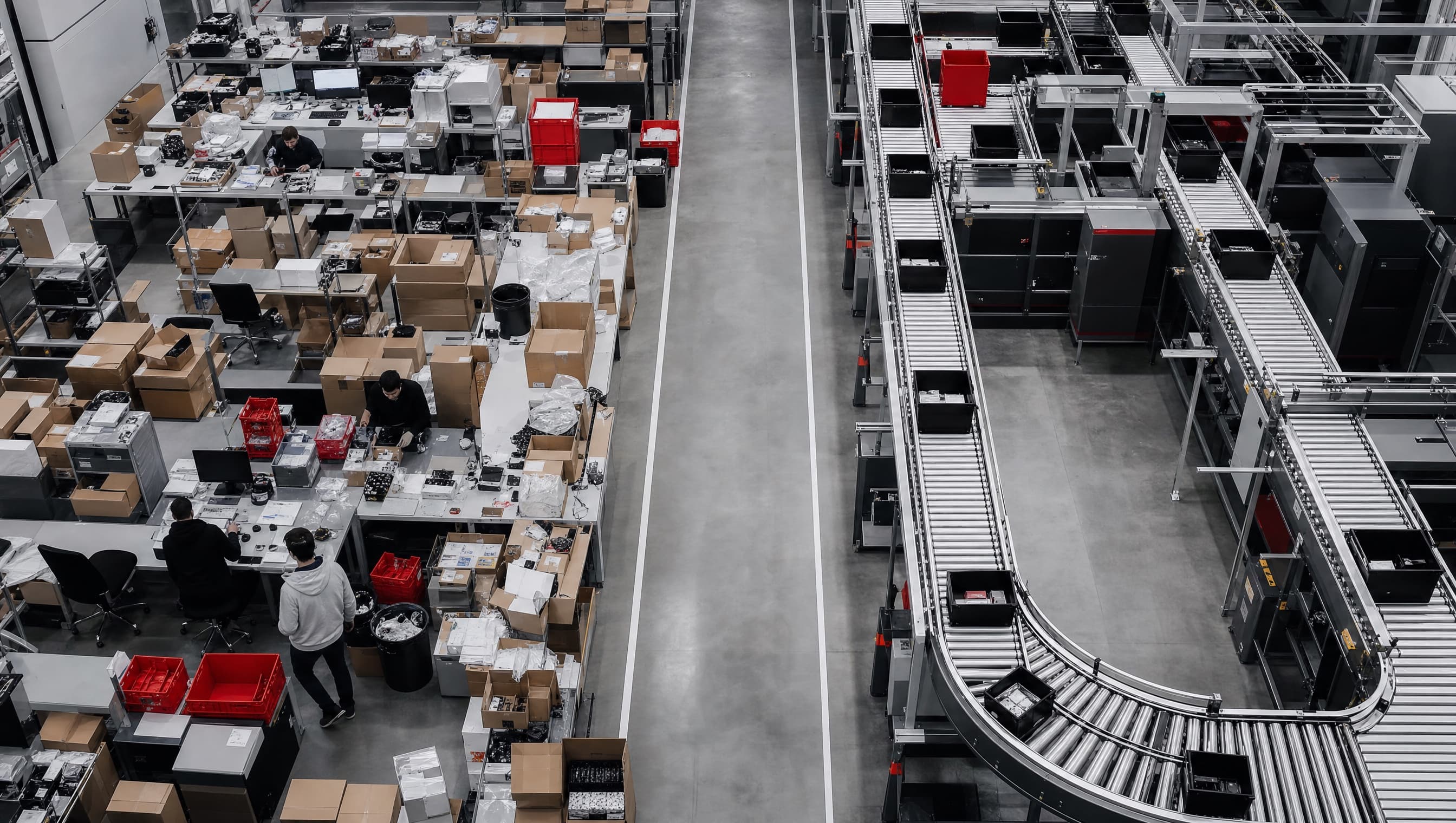
The matrix lists checks, not blanket characteristics of every provider. Scope, interfaces, price and approvals must be stated in the specific offer.
| Criterion | In-house | Outsourcing |
|---|---|---|
| Space and costs | Suitable existing space can be economical | Include storage fees, minimum charges and retained internal costs |
| People | Use proximity and experience; check cover and peaks | Confirm quantities and dates; agree treatment of extra volume |
| Systems | Existing WMS may be sufficient | Cost migration, integration, exports and support |
| Quality and speed | Measure actual times and errors for the same order | Agree service levels for the item profile and cut-off |
| Transition | No move needed; existing risks remain | Cost stock reconciliation, cutover and fallback plan |
Not every bottleneck requires outsourcing the whole warehouse. If ongoing operations work well, a single campaign can be the first scope to assess. Vaillant and the Bitburger summer campaign illustrate different emphases in the portfolio: recurring call-offs and waves of prize dispatch. A split operation needs distinct stock quantities, clear order routes and a shared exception rule. Reduced migration scope comes with more coordination between the two workflows.
For the Bitburger summer campaign, PROWERB took over the complete logistics management — from inbound goods receipt to prize dispatch — plus end-customer contact: a phone hotline and all email support, with ongoing evaluation of every inquiry. Orders came straight from the sweepstakes app into the system. For the brand, the campaign stayed what it was supposed to be: a campaign. Not an operations project.
There's no fixed threshold. Three indicators point that way: campaign peaks regularly break your own capacity, inventory exists only as a guess, and exception handling ties up people who are paid for campaigns. The cost building blocks for your own calculation sit under Pricing.
For larger fulfillment takeovers, seven phases lead from master data and contracts through systems and stock transfer to go-live. Around 14 weeks is a possible planning framework, depending on assortment, data quality, interfaces, stock availability and approvals. Individual campaigns and digital projects receive their own project plan.
Inventory management books in real time and without gaps. On top come live reports on inventory development, budget control and track & trace — available around the clock and integrable into your own systems. Dedicated contacts at three levels keep responsibility tangible: key account, campaign management, operational fulfillment.
No. The MEP platform connects existing online shops, ERP and WMS systems; in the simplest case orders run via interface or file exchange. The integration path is set during onboarding, not dictated by the provider.
With a manageable range, suitable space, predictable dispatch and short internal routes, in-house operations can be cheaper or faster. Compare the same services, including staff, systems, error costs and peaks, to determine whether that holds.
No, the scope follows the need. Bitburger outsources almost exclusively the promotion business, Vaillant almost exclusively ongoing operations, Coca-Cola both — from POS logistics through promotions to VIP ticketing. The scope is defined during onboarding and can grow.
The ROI calculator makes your assumptions about space, staff, systems and external costs visible. We then discuss assortment, channels and campaign calendar in the briefing; see Pricing for the cost structure.
