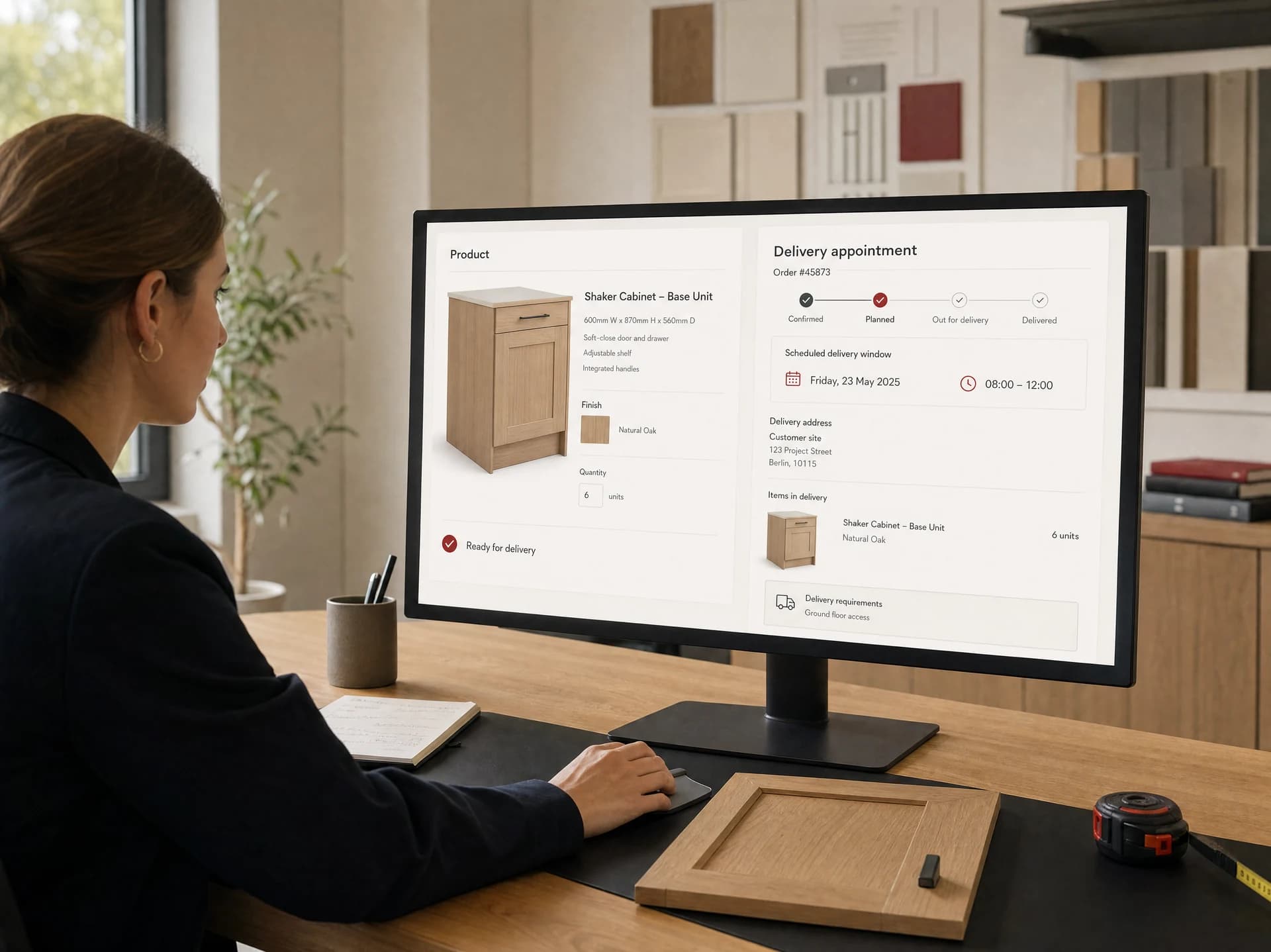
A German kitchen and furniture provider sells through the trade and, in parallel, is building its own direct-to-consumer brand. PROWERB runs both worlds from a single source: heavy-goods fulfillment with carrier coordination and exception handling — and the D2C brand store including Amazon brand registration, master data upkeep and compliance.
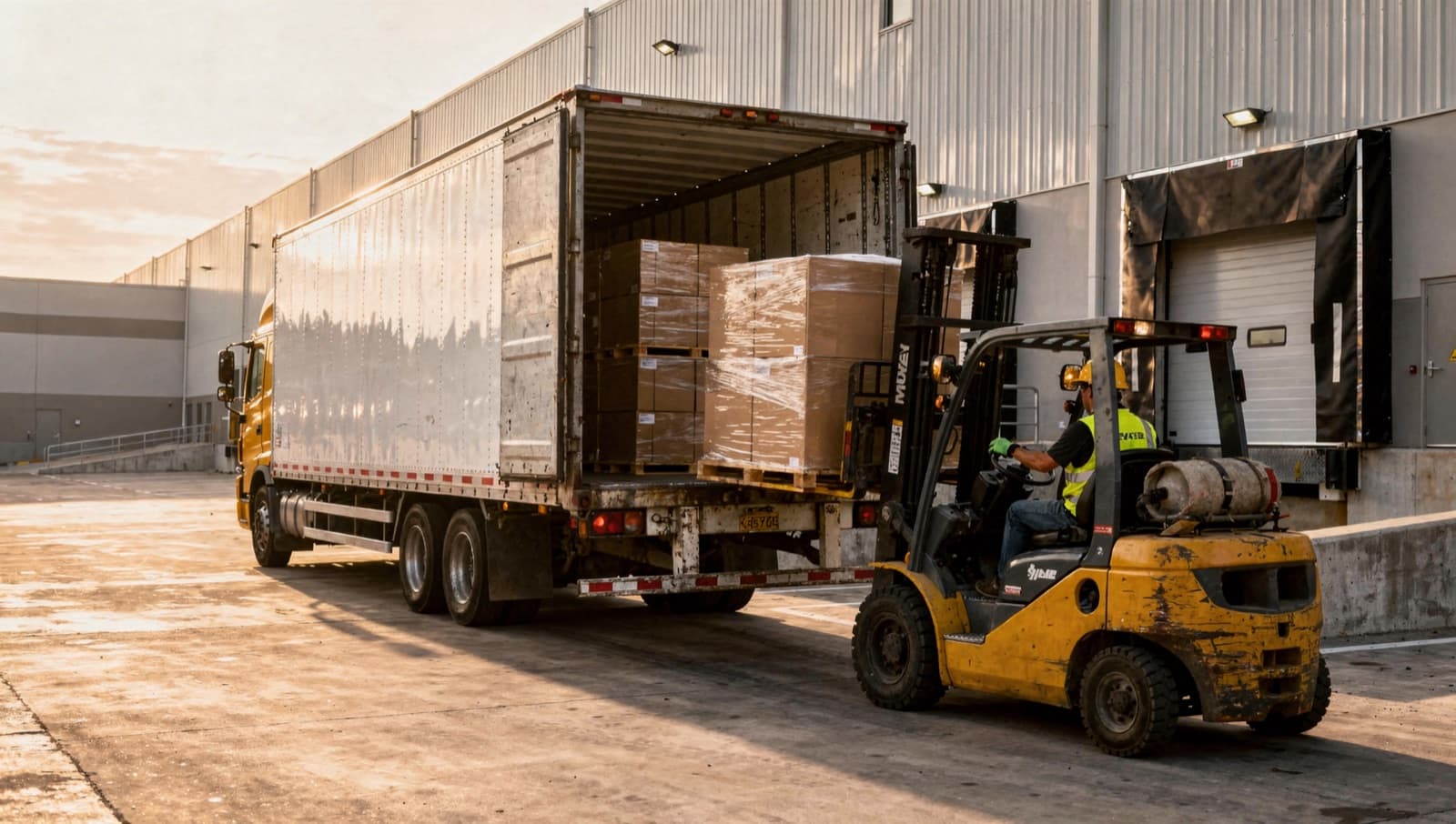
Since 1979 · more than 55,000 pallet slots · ISO 9001 & 14001 · EcoVadis Silver
The customer is kept anonymous on request; the name is available on request in conversation.
Kitchens and furniture are heavy goods: palletized, carrier-bound, subject to delivery notification requirements — and every transport deviation becomes an exception case. A dedicated direct-to-consumer brand demands the opposite of that world: maintained article data, clean listings, marketplace compliance.
Whoever splits both across separate providers ends up with two systems, two versions of inventory truth, and an interface right where the end customer is waiting. This provider decided differently.
On the physical side, PROWERB runs the complete ongoing operations: inbound/goods receipt with inventory posting, order-to-cash from order to credit note, carrier coordination with delivery notification and shipment tracking, plus exception handling for transport deviations.
Delivery scheduling runs system-supported — recurring goods-receipt and delivery notifications are processed within the workflow, not as individual cases. On the digital side, PROWERB operates the direct-to-consumer brand's brand store, has registered the brand with Amazon, and keeps SKU and master data current — including WEEE and CE conformity in the sales channel.
The operation is not a project with an end date but a running system. These building blocks interlock daily:
Deliveries are notified, booked in and inventory-managed system-supported — heavy goods in warehouse zones specifically designed for it.
Order acceptance, changes, invoice and credit note processing — managed end to end in the system.
Commissioning, appointment notification and shipment tracking for carrier-bound goods.
Transport deviations and additional costs are resolved, documented and closed in a structured way.
Operation of the own brand's D2C shop, Amazon brand registration, ongoing upkeep of SKU and master data.
WEEE and CE requirements in the shop and marketplace business are met and documented.
The mandate is among the most correspondence-intensive that PROWERB runs: tens of thousands of transactions, the vast majority of them recurring goods-receipt and delivery notifications. That is precisely the point — the volume is worked off through systemic control, not through individual exception handling.
And because fulfillment and digital commerce run under the same roof, responsibility doesn't stop at the loading dock: the same organization that books in the pallet also maintains the listing behind which it is sold.
This case is the clearest evidence of the axis PROWERB stands on: heavy-goods logistics and digital commerce operations with no handover point — within the same company.
Four service areas carry this mandate — each can also be commissioned individually.
Yes. Bulky and heavy goods are handled in warehouse zones specifically designed for them — palletized, carrier-bound, subject to delivery notification requirements. Carrier coordination, appointment notification and shipment tracking are part of ongoing operations.
Two providers mean two systems, two versions of inventory truth, and an interface right where the end customer is waiting. In this mandate, the same organization books in the pallet and maintains the listing behind which it is sold.
With tens of thousands of transactions, the mandate is among the most correspondence-intensive in the house — the vast majority are recurring delivery notifications. This volume is controlled systemically and processed within the workflow, not as individual cases.
Transport deviations and additional costs are resolved, documented and closed in a structured way through exception handling. Delivery notification and shipment tracking run continuously so deviations become visible early.
Yes. WEEE and CE requirements in the shop and marketplace business are met and documented — a fixed part of the digital mandate, alongside SKU and master data upkeep and Amazon brand registration.
The customer is kept anonymous at their own request; the name is available in conversation. To get started, a non-binding Needs Check in under 60 seconds on range, channels and volume is enough.
Tell us about your range, channels and volume — we'll respond with a concrete operating concept for logistics and digital commerce.