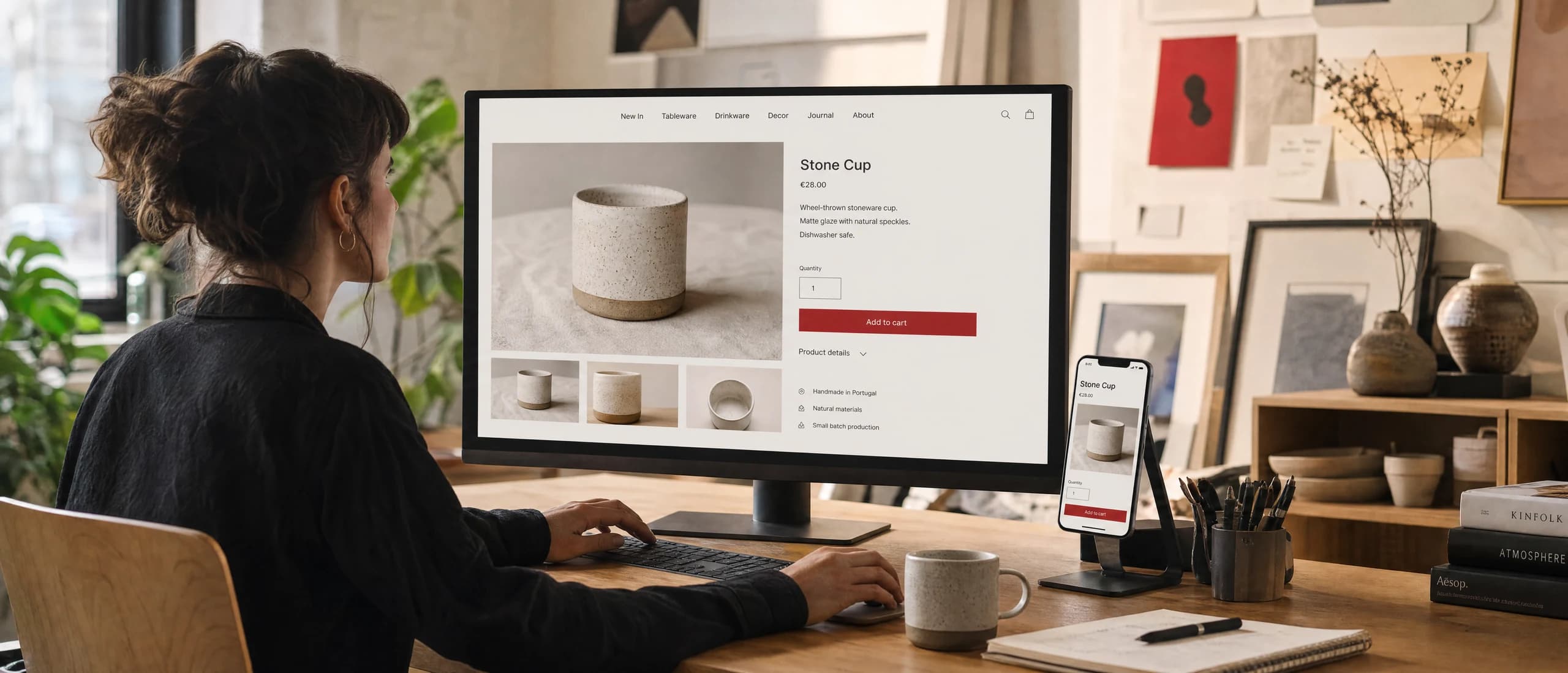
D2C (Direct-to-Consumer) refers to a brand's direct sales to end customers — without intermediaries. The Brandstore is the brand's own online shop, where those direct sales take place: own range, own prices, own customer data, own presentation. Unlike a marketplace listing, the brand retains control over presentation and customer relationship.
A brand store provides a direct customer relationship, first-party data and a place to test new products. Removing a retail intermediary also means bearing your own sales, marketing and operating costs. With the channel come order processing, storage, shipping, returns, customer support and applicable product requirements.
PROWERB runs Brandstores as operator in the background: shop front end, master data, inventory, dispatch and end-customer support in one house. For Arizona, goods dispatch for Amazon and D2C runs with a direct connection to the existing shop; for a kitchen manufacturer, we run the D2C Brandstore of its own brand including Amazon brand registration and WEEE/CE compliance. The brand stands at the front, the operation runs with us.
The Brandstore is a channel, not a silo. These four terms show which shop variants and which foundation are attached to it.
Within the agreed scope: shop front end, master data, order processing, stock, shipping and customer support. The briefing defines which tasks remain with your brand and which PROWERB manages.
An existing shop can be connected directly. For Arizona, goods dispatch for Amazon and D2C runs with a direct connection to the existing shop — the front end stays, PROWERB takes over the processing behind it.
We maintain evidence supplied by the responsible business for applicable items within the agreed shop and marketplace scope. Determining applicable requirements and legal product responsibility remain with the manufacturer or responsible economic operator.
Yes, both channels frequently run in parallel. For Arizona, PROWERB handles goods dispatch for Amazon and D2C from the same operation — Marketplace Operations and Brandstore draw on the same physical foundation.
With a non-binding Needs Check. For larger fulfillment takeovers, we use the seven-phase method: from requirements and master data through system integration, testing and stock transfer to go-live and handover to ongoing operations. Around 14 weeks is a planning guide for that scope; data quality, interfaces and stock transfer determine the actual date. Smaller or purely digital assignments receive a suitable introduction plan.
