Services · Brand Stores & Portals
Product maintenance, orders and enquiries are part of daily shop operations. PROWERB handles the agreed tasks and keeps the shop, stock and shipping connected.
Agree contents, references and the intended result.
Align materials, data and responsibilities before execution.
Keep agreed updates and next steps visible.
Every store change needs an instruction: new products, changed prices, retiring variants or different ordering permissions. We agree the submission route, approval owner and acknowledgement. Buyer queries and open cases remain visible in daily service.
Atlas & Nexus · PROWERB systems
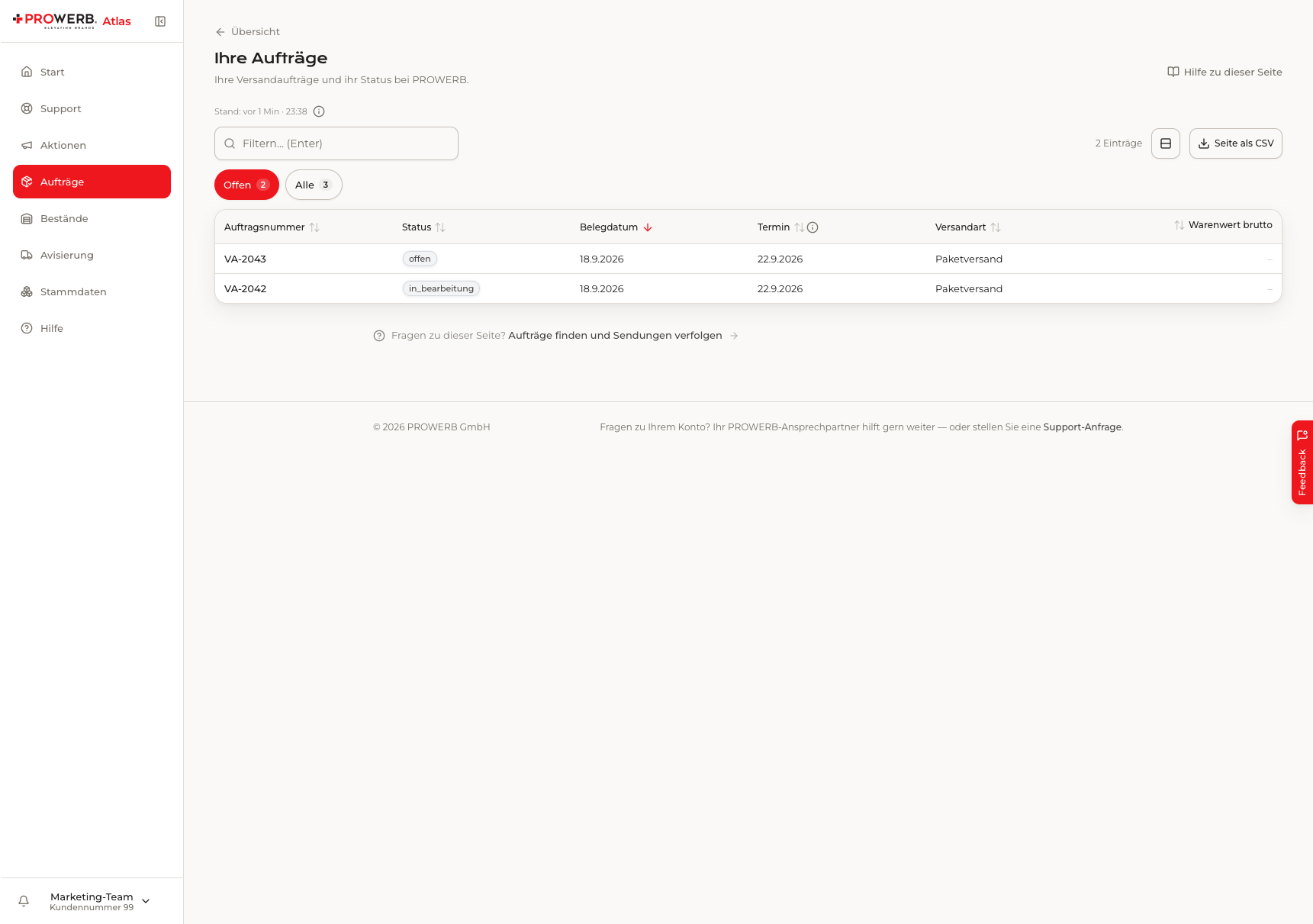
Atlas gives clients access to products, stock, campaigns and orders. Nexus supports operational processing. We agree the views and handovers needed for your project.
A brand adds a promotional collection at short notice. Beyond the visible product, lead time, purchasing rights, packaging and later retirement need to work. Introduce the item with a test order and remove it from the active assortment under control after the promotion.
Align image, description, variant and purchasing rules. Buyers can see what they will receive and its intended use.
Follow a typical call-off into stock posting and shipping. Check special packaging or delivery notification along the way.
Define ordering availability, remaining stock and later enquiries. Support still needs to identify an item after it disappears from the storefront.
At Prowerb, brand store operations means the complete route — not half the frontend.
For a larger fulfilment takeover, introduction follows seven phases (0–6). Around 14 weeks is a planning guideline once master data, contracts, inventory transfer, interfaces and approvals are settled. A digital build or smaller scope receives its own schedule. Integrations and onboarding explain the handover in more detail.
Reconcile products, open orders and documents with the previous owners.
Assign catalogue maintenance, approvals, customer service and cover.
Test ordering, dispatch feedback and corrections together.
Integration follows the customer landscape: existing shop, standalone solution or MEP. Catalogue maintenance and service receive a defined request path, approval owner, cover and response route. A campaign increase is coordinated with goods, data and capacity planning.
The relationship with Renault began in 1996. Today, PROWERB manages the Renault and Dacia shops, with ongoing item maintenance instead of a one-off project. Oatly has ordered via a standalone shop solution since 2023 — from order acceptance through to credit notes. For Coca-Cola, digital ordering platforms run through which all of the group's brands are managed. And behind every one of these frontends: the same warehouse, the same document chain, the same operator.
No. Prowerb connects existing shops directly — for example, Arizona's orders run through their existing shop straight into warehouse and dispatch. Alternatively, Prowerb provides a standalone shop solution or operates the store on the MEP platform.
For a larger fulfilment takeover, introduction follows seven phases (0–6). Around 14 weeks is a planning guideline once master data, contracts, inventory transfer, interfaces and approvals are settled. A digital build or smaller scope receives its own schedule.
Prowerb — via standard reporting processes for new creation, renaming and deactivation. Shop display and warehouse booking change simultaneously, because both live in the same system.
Yes. Multiple brands can be managed with separate ranges, user permissions and ordering rules. Language, shipping and billing are agreed separately for additional countries. We define which tasks are shared and where a brand or market needs its own process.
Prowerb handles exception cases, shipment tracking and returns itself — including correspondence with recipients and carriers. Operations doesn't end at the loading dock.
Send us your assortment, orderer structure and system landscape. You'll get back a concrete operating model — not a quote for a website launch.
