Pick-and-pack refers to the warehouse process in which ordered items are picked from stock and packed ready for dispatch — from order receipt to a shipment ready for handover. Pick-and-pack is the core of fulfillment, but not the same thing: fulfillment additionally covers goods receipt, storage and dispatch handling. It should also be distinguished from kitting & assembly, which assembles defined units such as sets or displays, either for stock or for a specific order. Pick-and-pack executes orders that already exist.
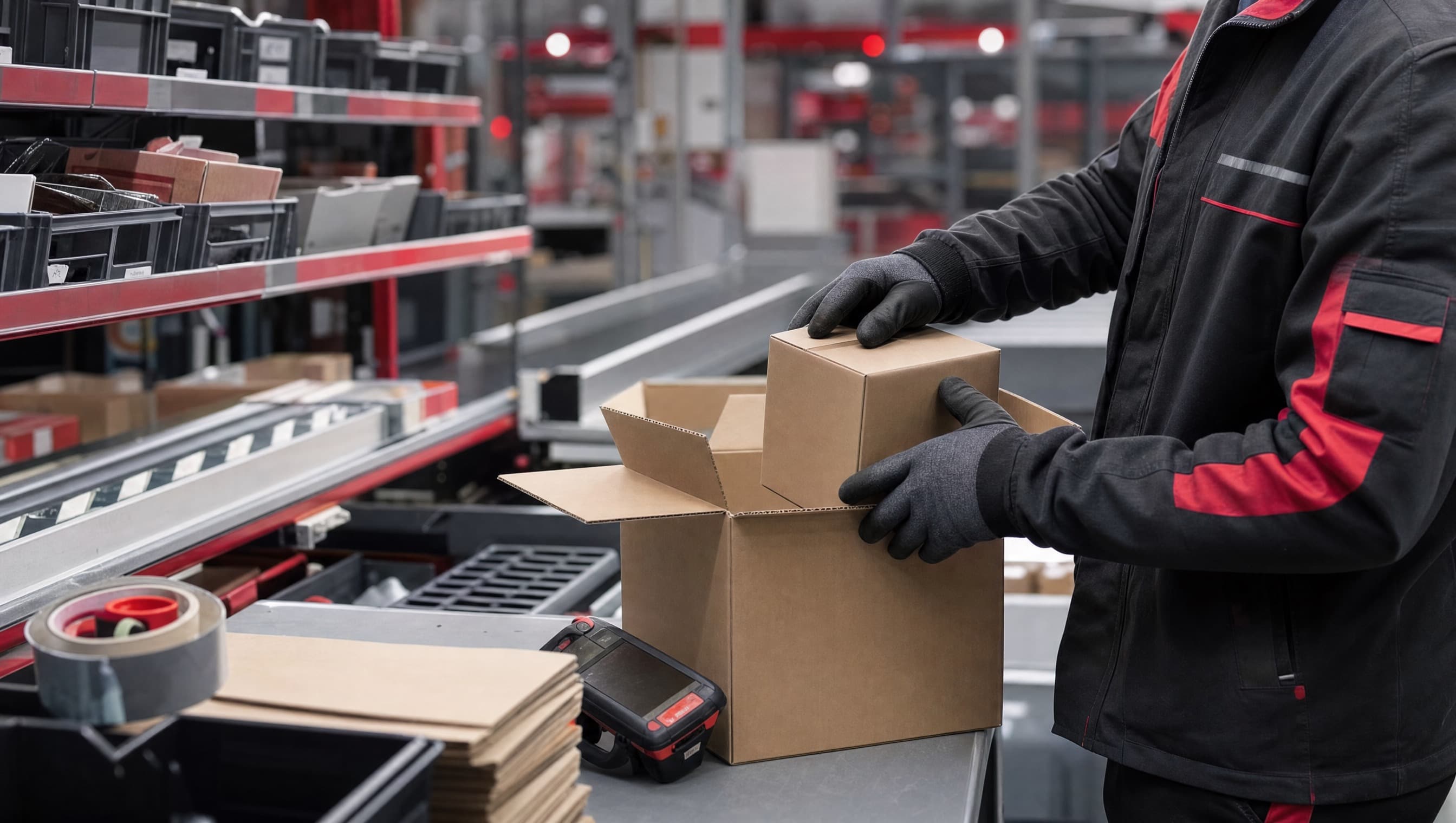
Pick-and-pack is the point where inventory data meets physical goods — and where every discrepancy becomes visible. Wrongly picked items, missing positions and damaged packaging generate complaints, replacement deliveries and exception cases; every single one costs more than the original shipment.
Three figures matter for decision-makers: error rate, throughput time from order receipt to goods issue, and cost per shipment. Anyone buying fulfillment should ask for all three — and how they are measured.
PROWERB picks and packs more than 2 million shipments per year. For permanently stocked promotional items, over 95 percent of orders leave the warehouse on the day the order is received.
The foundation is PROWERB CORE, the company's own ERP/WMS with real-time inventory management: picking works against the stock that is actually on the shelf — not yesterday's. The same-day share is an operating metric for permanently stocked promotional items, not a promise for each order.
Dispatch depends on available stock, complete and approved order data, the agreed cut-off and working days. We clarify the reporting period and applicable service level for your project.
Four terms before and after:
Pick-and-pack selects and packs the ordered items. Kitting creates a defined unit, such as a shirt, mug and insert. This can happen in advance for stock or after an order arrives.
The same-day dispatch share is above 95 percent for permanently stocked promotional items. It depends on available stock, complete and approved data, the agreed cut-off and working days. Reporting period and service level are clarified for the project; the metric is not a delivery promise for every order.
Through system-guided processes instead of manual transfers: errors arise where inventory data is outdated or orders are transferred by hand. PROWERB CORE manages stock in real time and is RFID-capable — picking works against actual stock.
No, pick-and-pack ends with a shipment ready for handover. Carrier handover, delivery notification and shipment tracking follow on — although in fulfillment operations, both stretches interlock without a handover point for the client.
