The technology and R&D lab in Düsseldorf develops hardware and software for specific operational tasks: fixtures, GPS trackers, NFC applications, digital displays, robotics and AI. This overview explains how those fields connect; the process pages cover prototyping, materials and implementation in detail.
Since 1979 · more than 2M shipments/year · ISO 9001 & 14001 · EcoVadis Silver
PROWERB is not a mass fulfiller but a custom fulfiller: what we run for brands is rarely off the shelf. A promotional shop that orders differently. Tracking that makes a campaign visible in real time. An activation that needs its own hardware. You don't buy requirements like these ready-made — you develop them. That is why, alongside warehousing, finishing and IT, PROWERB runs its own lab: the workshop where an idea becomes first a prototype and then a device fit for operation.
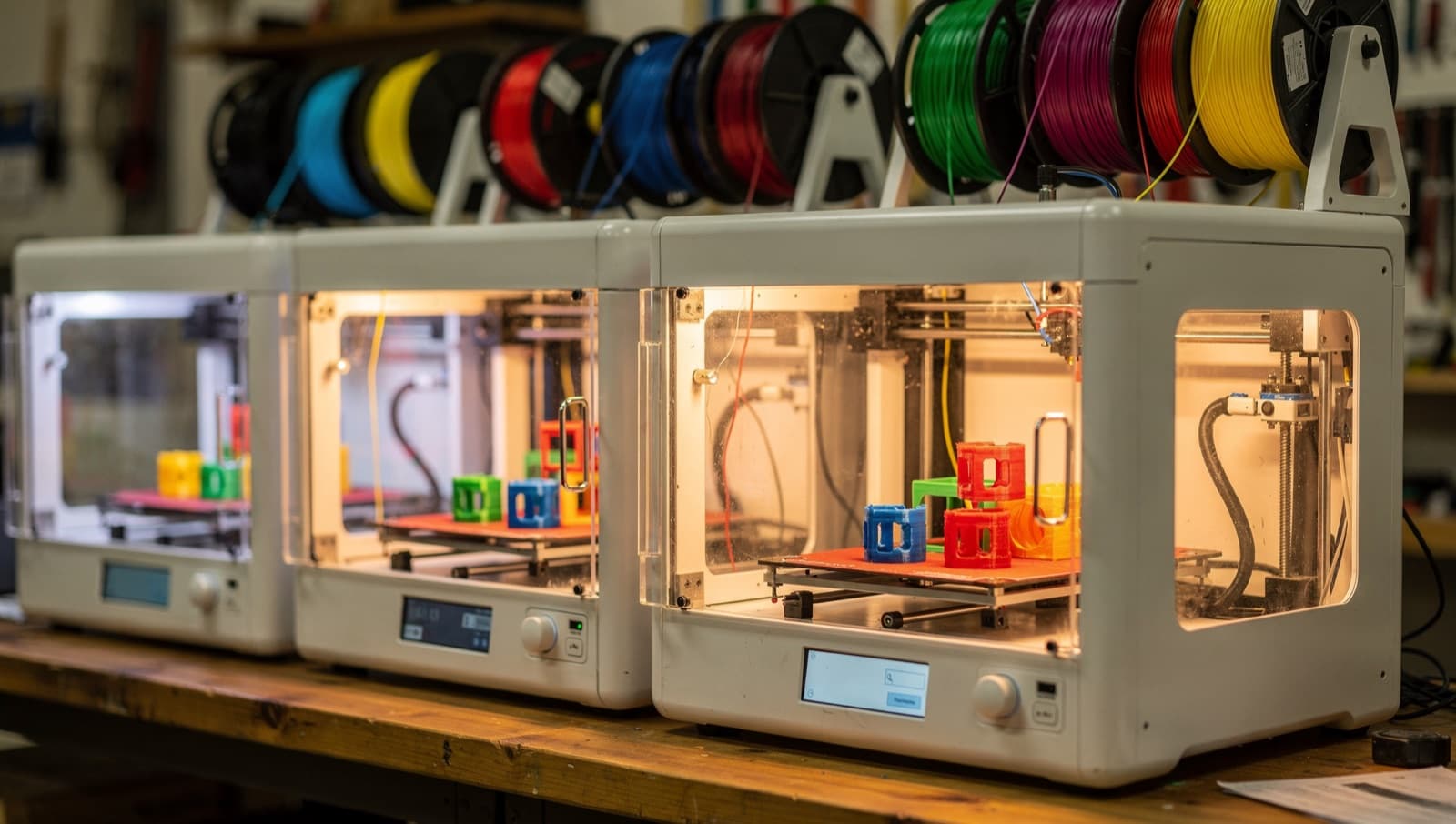
A suitable, prepared print can be produced overnight. Larger or complex samples need their own schedule for printing, finishing and testing. We agree the first delivery date from the data revision, material, geometry and test objective.
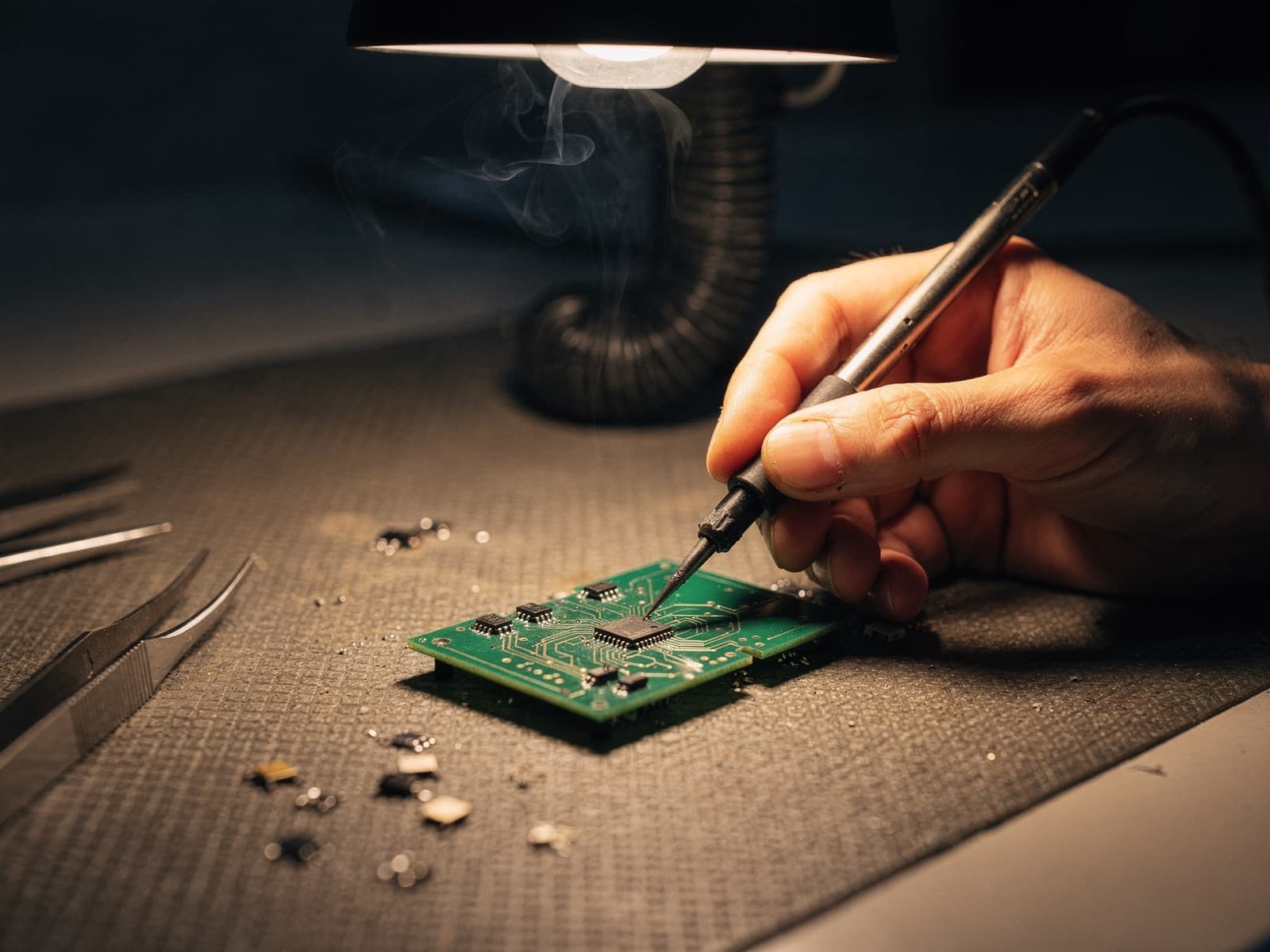
Own hardware means own electronics. In the clean lab, assemblies are developed, populated and tested — from the first sample board to small-batch production. What works here is something PROWERB can also stand behind.
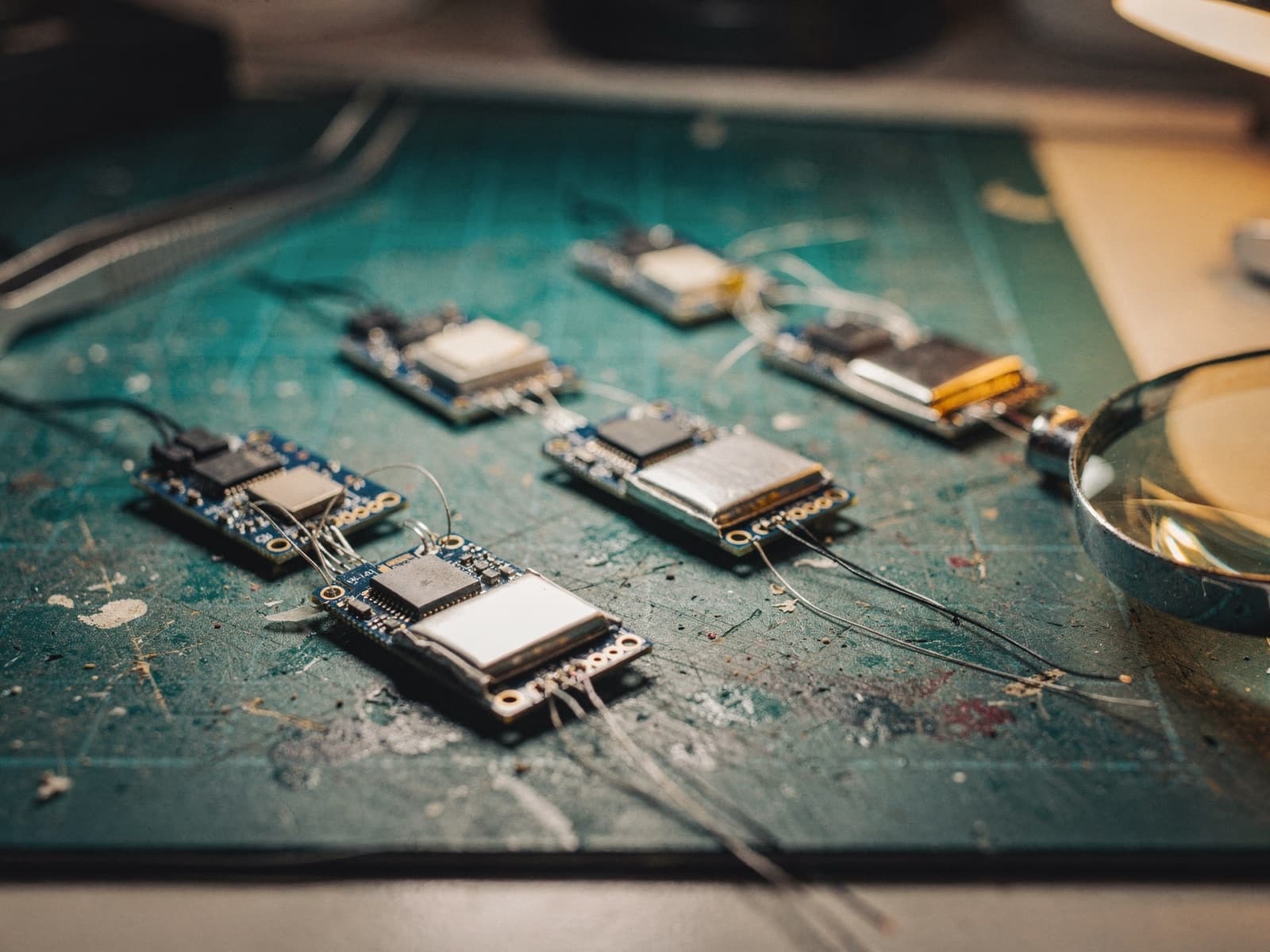
The biggest advantage of owning the hardware: it plugs straight into the logistics PROWERB already runs. A tracker we develop ourselves talks to our own systems — without the detour via a third-party provider. NFC campaigns connect the physical promotional item with the digital activation. Both are created in the lab and run in operation.
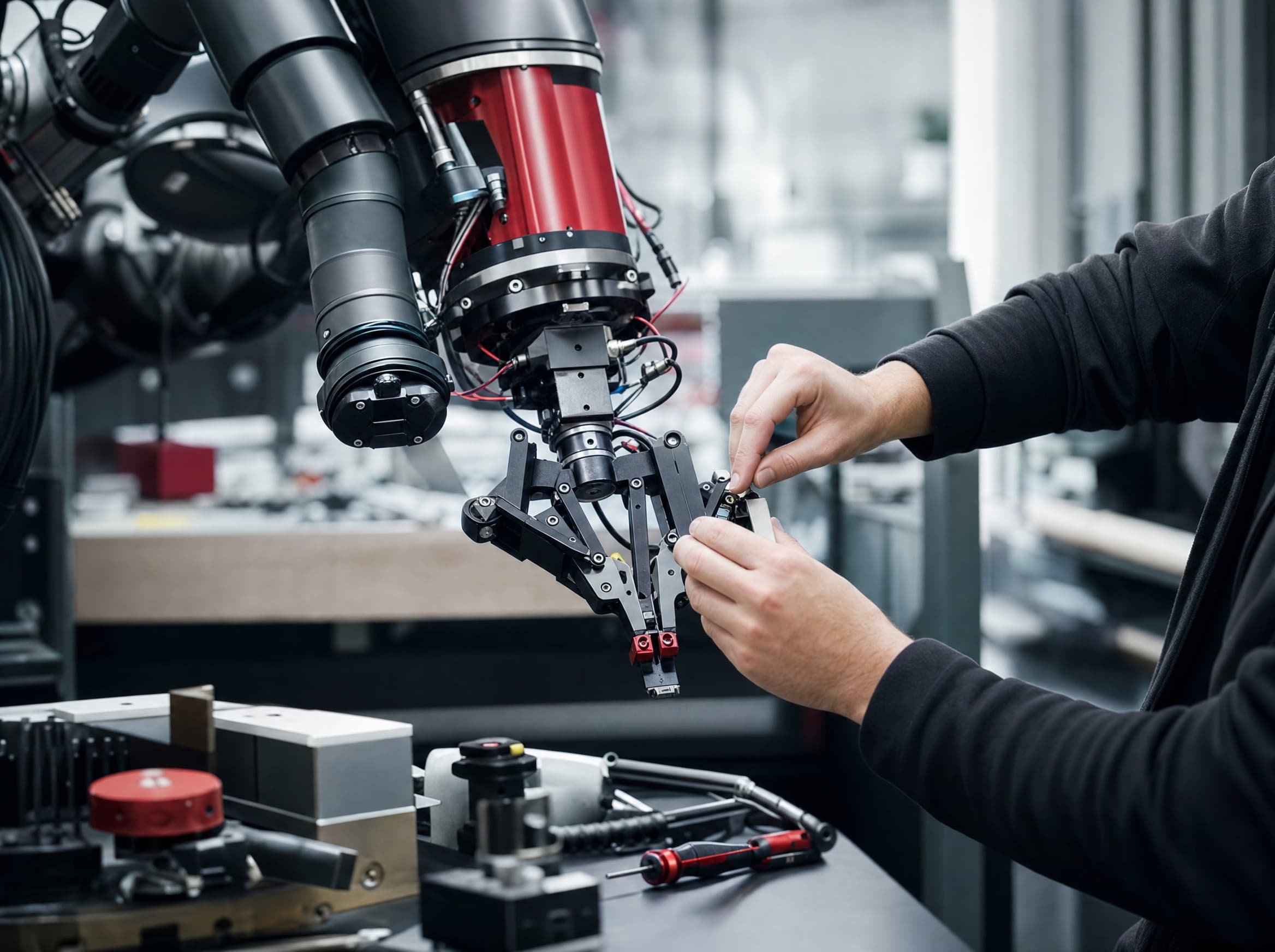
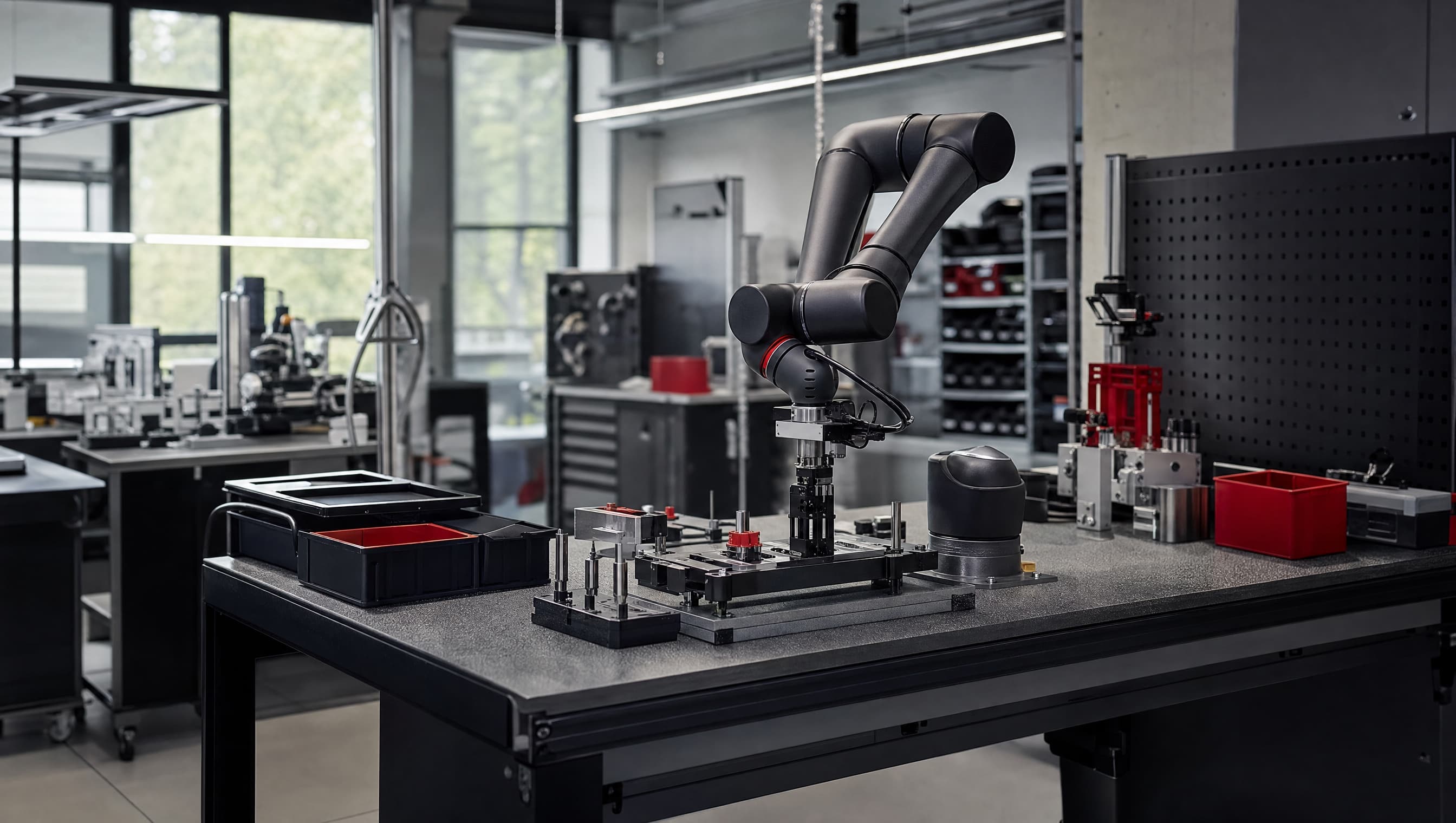
At PROWERB, automation does not stop at the conveyor. In the lab, a robot arm and camera work together with edge AI: image recognition decides which part is picked — directly on the device, without the detour via the cloud. This creates automation cells that can also handle small, changing batches.
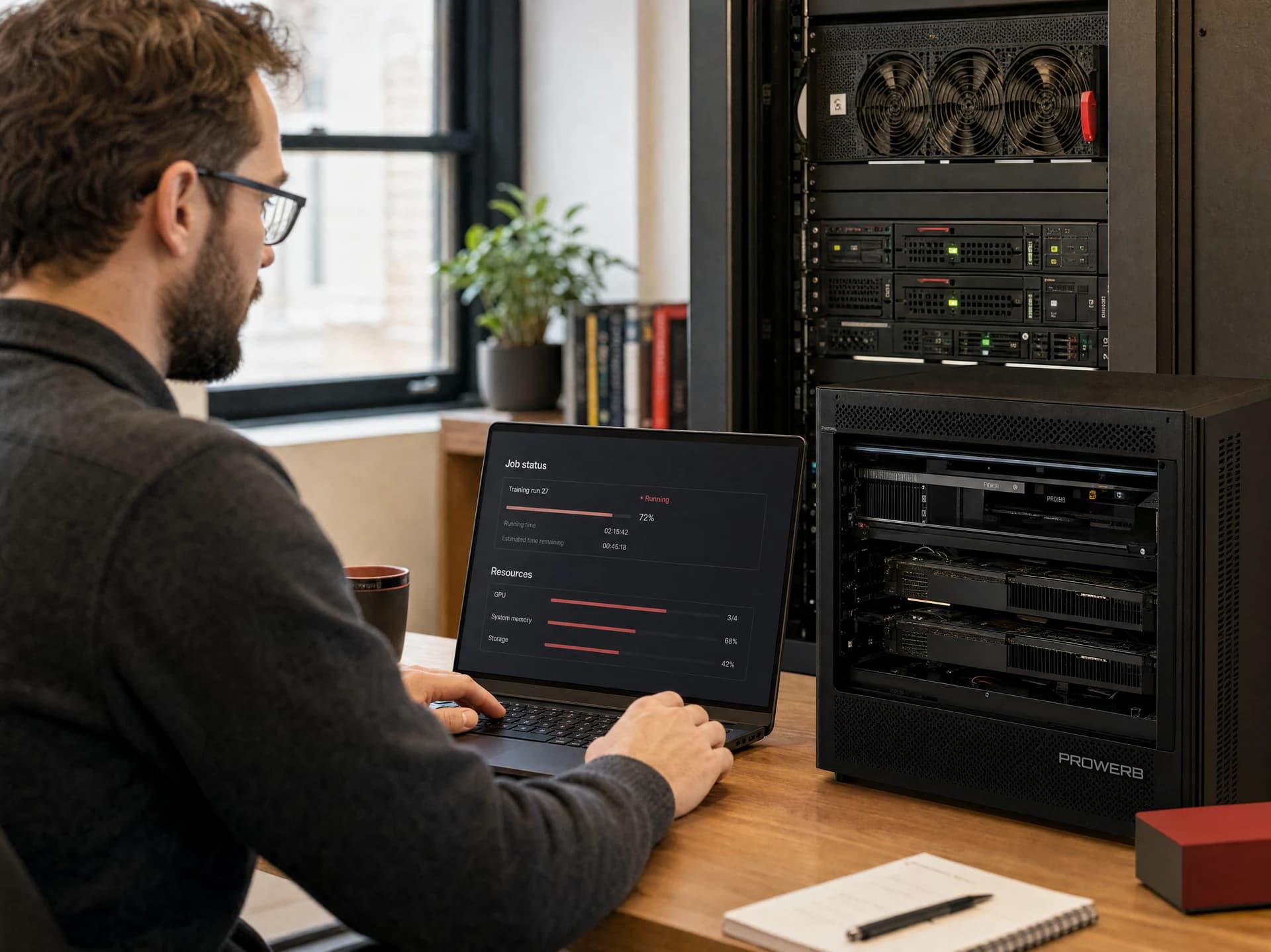
PROWERB operates its own GPU cluster for machine learning and self-hosted language models. In-house development connects suitable language models to the data sources and workflows of the intended use. For classification, analysis and image recognition, we agree the model, data access and operating location per project.
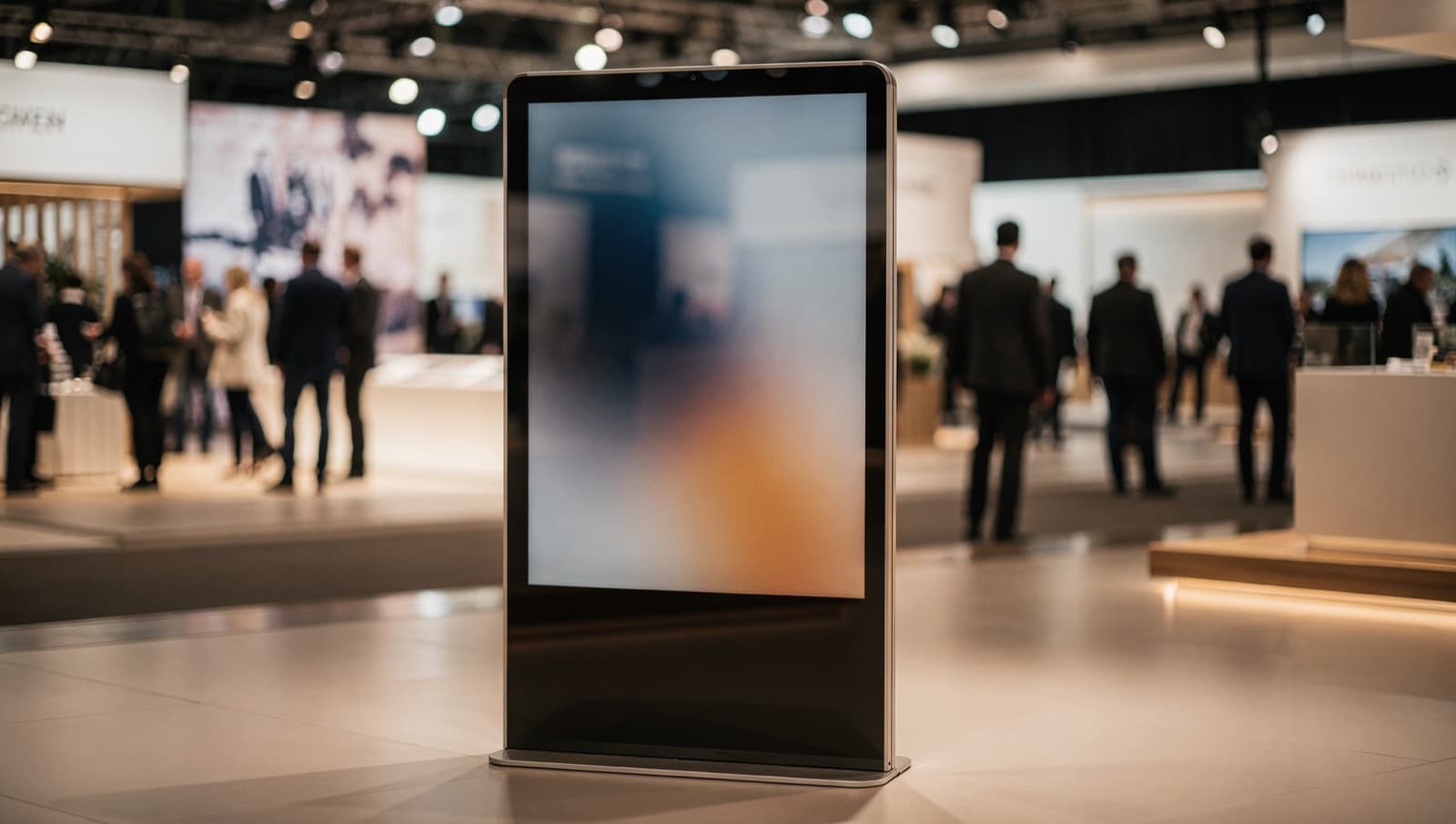
Wherever brands show up — at trade fairs, at the point of sale, in the store — the lab supplies the hardware to match. Digital totems, directly printed carrier panels, scanned objects for further processing: activation is not just a concept, it is a device.
A tracker connects to shipment tracking, a fixture is tested on the campaign line and a model is embedded in a defined service process. Each project plans the prototype, test criteria and operation together. In-house development and existing components complement each other where they best serve the task.
The technology and R&D lab is in Düsseldorf, together with the IT and digital hub. Textile finishing and series production run at the headquarters in Kleve. Development and operation interlock, but are cleanly separated.
Yes. From the populated board to the finished device, GPS trackers, sensors and activation hardware are created in-house — including soldering, assembly and testing in the clean lab.
Our own GPU cluster supports training, adaptation and self-hosted model operation. The models and data processed there are agreed for the specific use case; data access and operating location are part of that decision.
Yes. Whether a 3D-printed fixture, your own tracker concept, an NFC activation or automation: describe in the briefing what you want to create — we respond with a proposal for the first prototype.
Describe what you want to create — from a 3D sample to your own hardware to AI-assisted automation. The no-obligation needs check takes under 60 seconds.