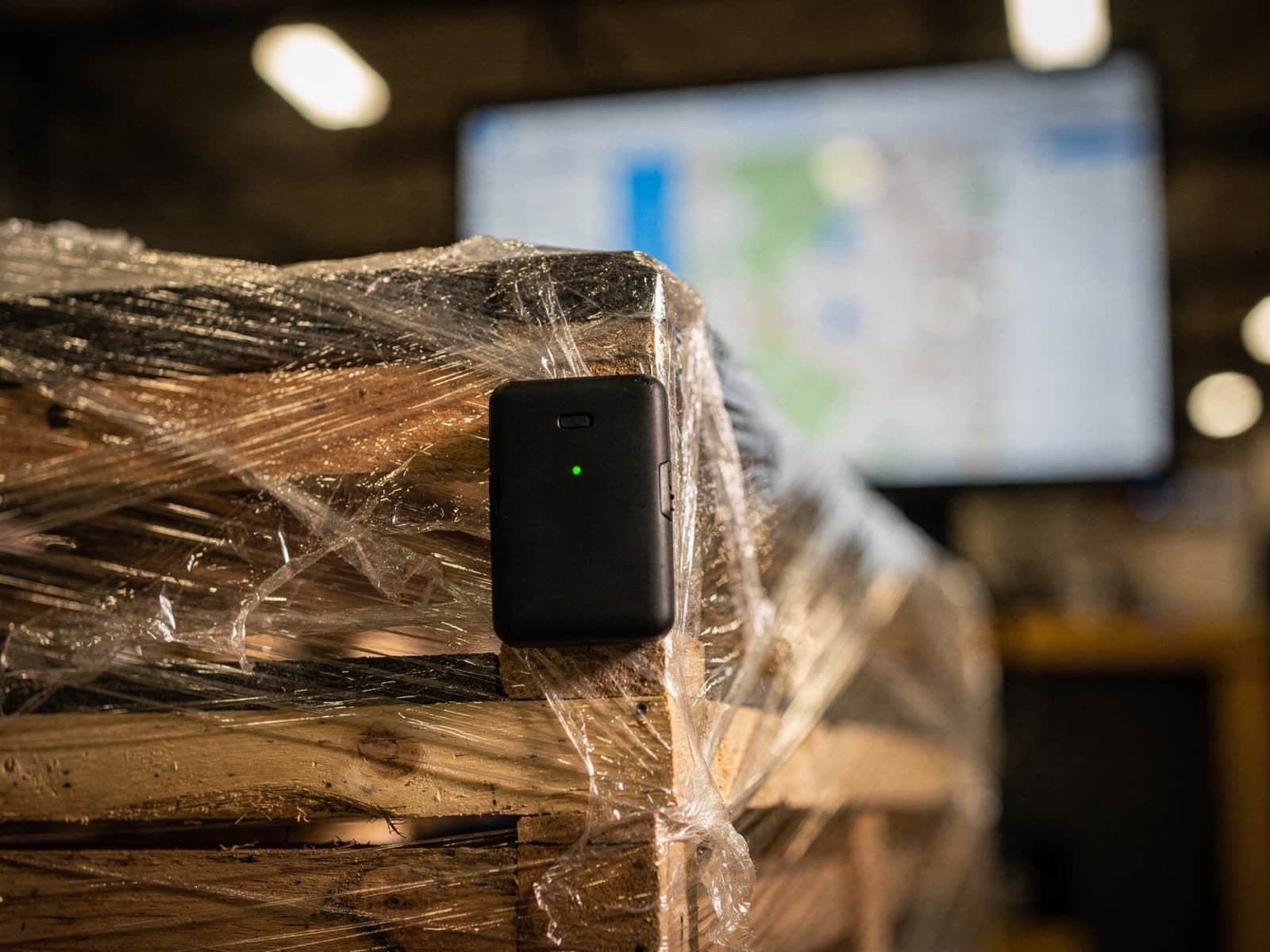
PROWERB can add agreed GPS tracking to suitable shipments and event equipment. The latest reported position supports transport planning and exception handling alongside carrier events. Deployment duration, updates and reception conditions are agreed before the start.
Read on →
Since 1979 · more than 2M shipments/year · ISO 9001 & 14001 · EcoVadis Silver
Carrier scans describe transport events. Optional agreed tracking can support enquiries between these events. Reception, network, battery life and installation limit freshness; a missing signal does not prove loss or standstill.

Example: a time-critical equipment load carrier receives a tracker for the agreed deployment period. Before departure, we check mounting position, power or battery life and reception. The update interval and owner of a missing-signal case are agreed; the latest received position is assessed with its timestamp.
Together we define what gets tracked: the individual shipment, the load carrier, or the complete event equipment for a campaign.
The tracker is attached during packing or loading and assigned to the shipment in the system — tracking and order belong together from the start.
The position remains visible during transport and at the site of use — regardless of whether the carrier scans or not.
In case of delay, deviation, or reported non-receipt, the position history provides the factual basis. The exception-handling team works with data instead of assumptions.
After the campaign or event, the tracker returns with the goods, is inspected, and goes into the next deployment.
Not every standard shipment needs GPS. Tracking is deployed where goods are hard to replace, time-critical, or permanently in circulation.
Location data can be provided in the agreed reporting alongside shipment status and inventory. The source and timestamp of the latest response matter. Missing or outdated signals are clarified with the responsible contact.
GPS tracking doesn't stand alone here. It's the position layer of a tech stack built in-house: PROWERB CORE as a proprietary ERP and WMS, the MEP platform, the robotic system PROFLOW APC, a proprietary data lake.
And it meets an operation where goods are actually permanently on the move — event logistics and VIP ticketing for Coca-Cola, fan-shop and jersey logistics for Borussia Mönchengladbach, campaign logistics for brands such as Erdinger.
Where this much is being moved, the question "where is it right now" isn't an exception — it's everyday business.
GPS tracking works best combined with adjacent services:
Carrier shipment tracking reports scan events at handover points — there's no information in between. GPS tracking delivers the live position of the goods, independent of the carrier. Both complement each other: standard tracking for the shipment volume, GPS for what particularly matters.
For event equipment, rental stock, time-critical campaign goods and high-value special shipments. We jointly determine what gets tracked per order — GPS is a targeted building block, not a blanket surcharge on every shipment.
In the Operations Cockpit, together with track & trace, inventory development and live reports — available around the clock and integrable into your systems on request.
Yes. In cases of reported non-receipt or transport deviation, the position history provides the factual basis. That shortens resolution with the forwarder and recipient — handled by PROWERB's exception-handling team, in the customer's name on request.
It returns to the warehouse with the goods, is inspected, and goes into the next deployment. The return runs through the same system-supported route as delivery.
No. What's tracked is the shipment, the load carrier, or the equipment — not people and not third-party vehicles.
In the briefing, we clarify product category, route and deployment duration. After that, you'll know whether and how GPS tracking secures your shipments and your equipment.