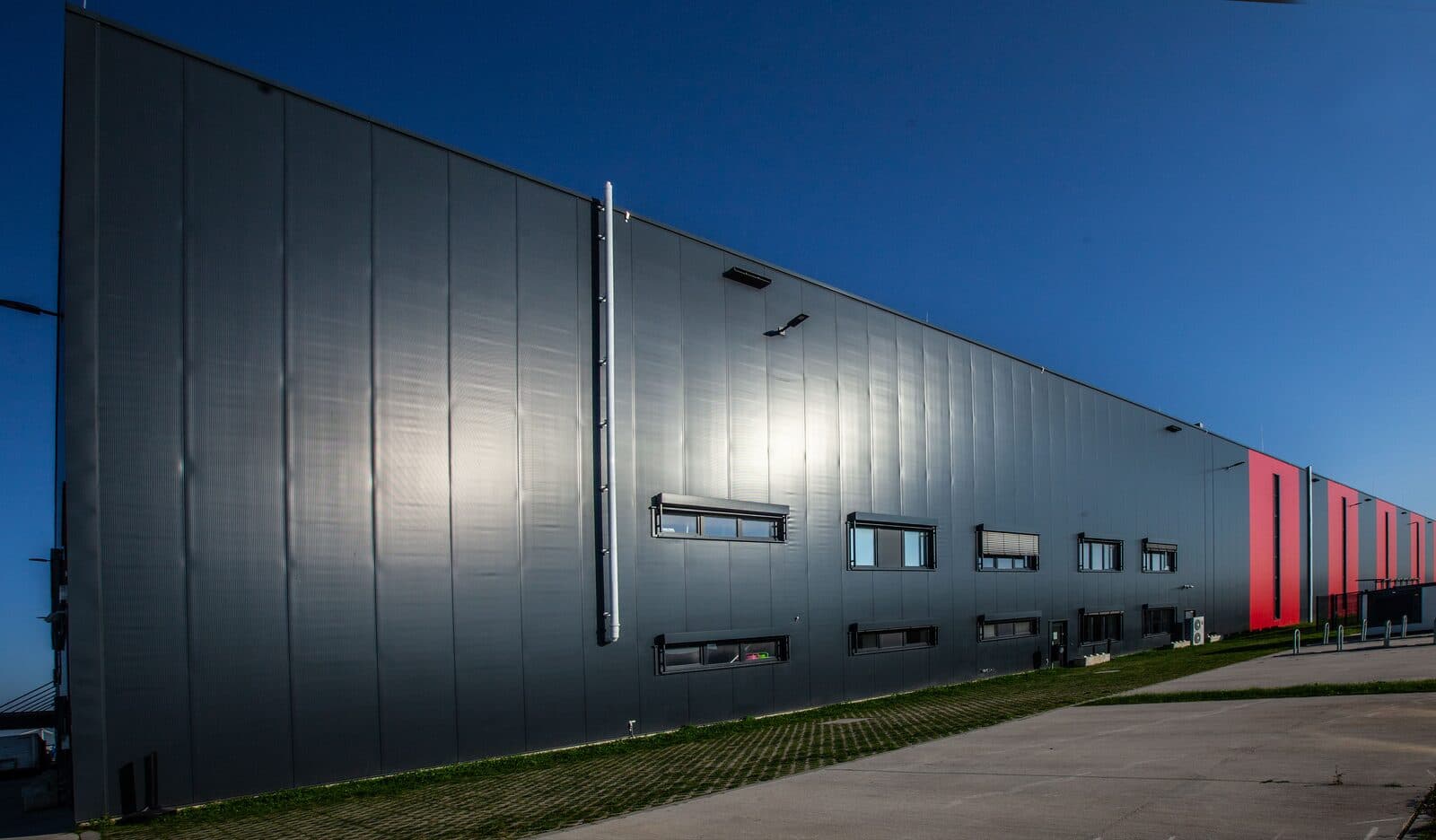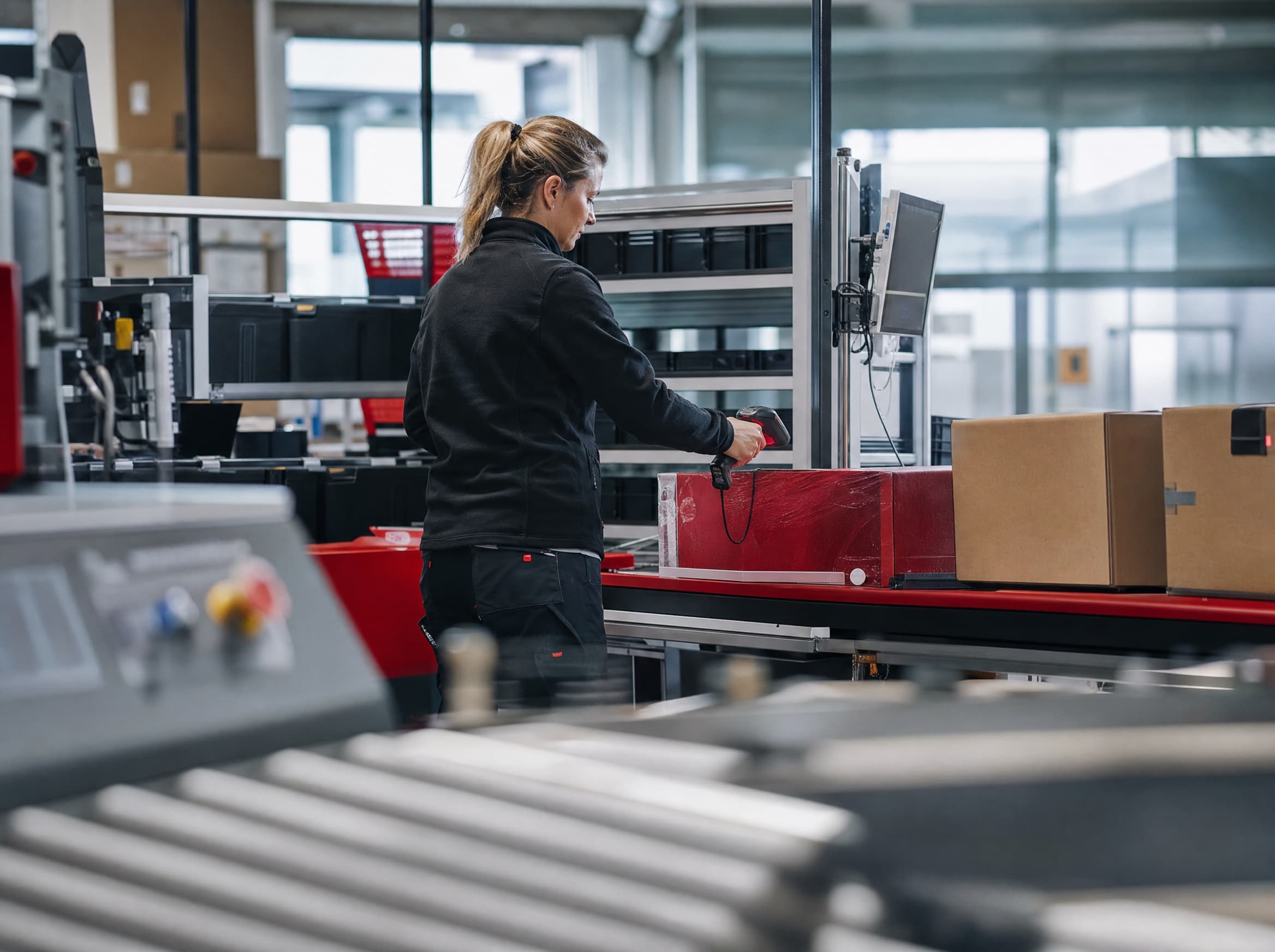
Since 2011, PROWERB has run the order and logistics processes around promotional products for an international telecommunications group — in ongoing operations, week after week. Item master data, goods receipt, order processing, print data approval, dispatch, reporting: one chain, one system, one team.
Since 1979 · more than 55,000 pallet slots · ISO 9001 & 14001 · EcoVadis Silver
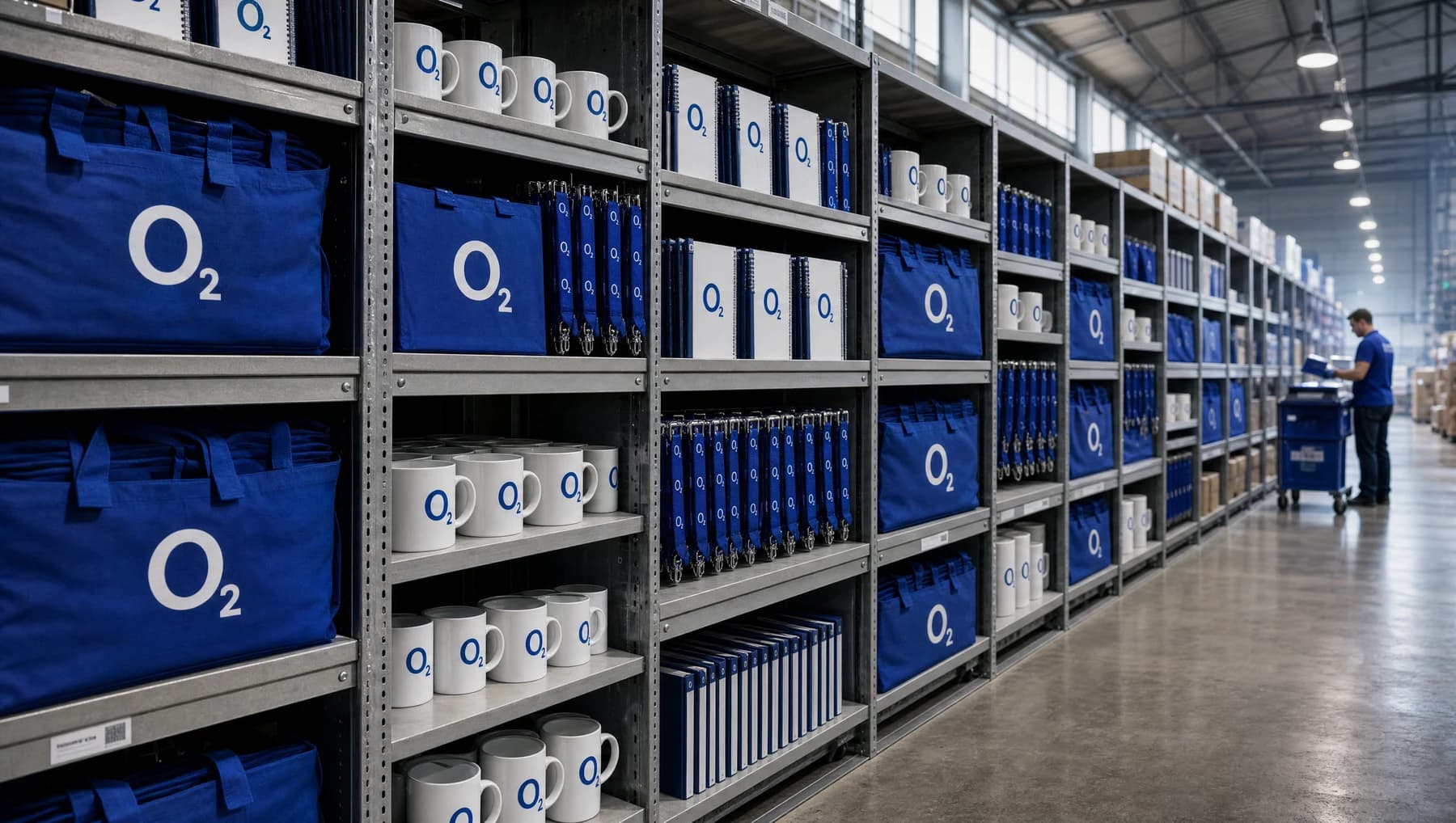
The case in brief — what's running, since when, on what basis.
Promotional products demand at a telecommunications group is continuous: items enter the assortment and leave it again, orders change after they've been placed, print data needs correction loops, suppliers need to be coordinated. Treating these as individual cases produces queries and friction. What was needed was an operation that runs them as standard processes — with fixed forms, defined workflows and a warehouse that books every movement.
PROWERB runs the complete operational chain for this group. Items are created, changed and deactivated via standard change forms. Goods receipts are booked in and managed in inventory. Orders run through a defined order-to-cash process — including the order changes that are part of day-to-day business.
Dispatch runs via parcel service and freight forwarder, with suppliers coordinated directly. Print data goes through a fixed approval workflow with documented correction loops. Periodic reporting keeps the customer up to date.
The technical foundation is the in-house developed PROWERB CORE, with ERP, WMS and process engine in one system.

Ongoing operations follow a fixed pattern. Each station has a defined process — and every transaction a documented path.
Creation, renaming, deactivation — every item enters the system via a standard change form.
Deliveries are booked in, inventory managed in real time, discrepancies resolved directly.
Orders and subsequent order changes run through the order-to-cash process. Changes are planned for, not the exception.
Approvals with correction loops — documented and traceable, until the artwork is finalized.
Picking, packing, dispatch via parcel service and freight forwarder — coordinated through to delivery.
Periodic reports make inventory, movements and open transactions visible.
Since 2011, the chain has run at the same pace — several thousand order, logistics and reconciliation transactions, managed through standardized forms and fixed workflows. Hardly any campaign peaks, instead plannable continuous load: This group represents the type of ongoing operations customer. The counter-model — high-load campaigns with short changeover time — runs under the same roof. Being able to do both is the point.
Three cases, three profiles — from continuous order call-off to campaign business.
The complete operational chain: item master data via standard change forms, goods receipt and inventory management, order-to-cash including order changes, print data approval, dispatch via parcel service and freight forwarder, and periodic reporting. Everything runs in one system and through one team.
Order changes are planned for in the order-to-cash process, not the exception. They run through the same defined workflow as the original order — with a documented path for every transaction.
Through a fixed approval workflow with documented correction loops, until the artwork is finalized. Every loop is traceable — nothing runs on a verbal say-so.
On the in-house developed PROWERB CORE — ERP, warehouse management (WMS) and process engine in one system. Inventory is posted in real time, every movement is visible in the system.
Through periodic reporting that makes inventory, movements and open transactions visible. On top of that, a dedicated contact instead of a call center.
Onboarding follows a seven-phase methodology with a time-to-live of roughly 14 weeks; parallel operation with the previous setup is possible. The entry point is a non-binding Needs Check in under 60 seconds.
Tell us about your order and logistics needs. We'll show you, using concrete processes, what ongoing operations look like at PROWERB — from the master data form to reporting. Onboarding follows a seven-phase methodology, time-to-live roughly 14 weeks.