Quota allocation refers to the rule-based distribution of limited quantities to defined recipient groups — tickets, campaign merchandise, promotional products or budgets. Instead of ordering freely, every dealer, location or guest receives a fixed quota. Allotment, drawdown and remaining quantities are managed systemically, so scarce goods arrive where they are planned.
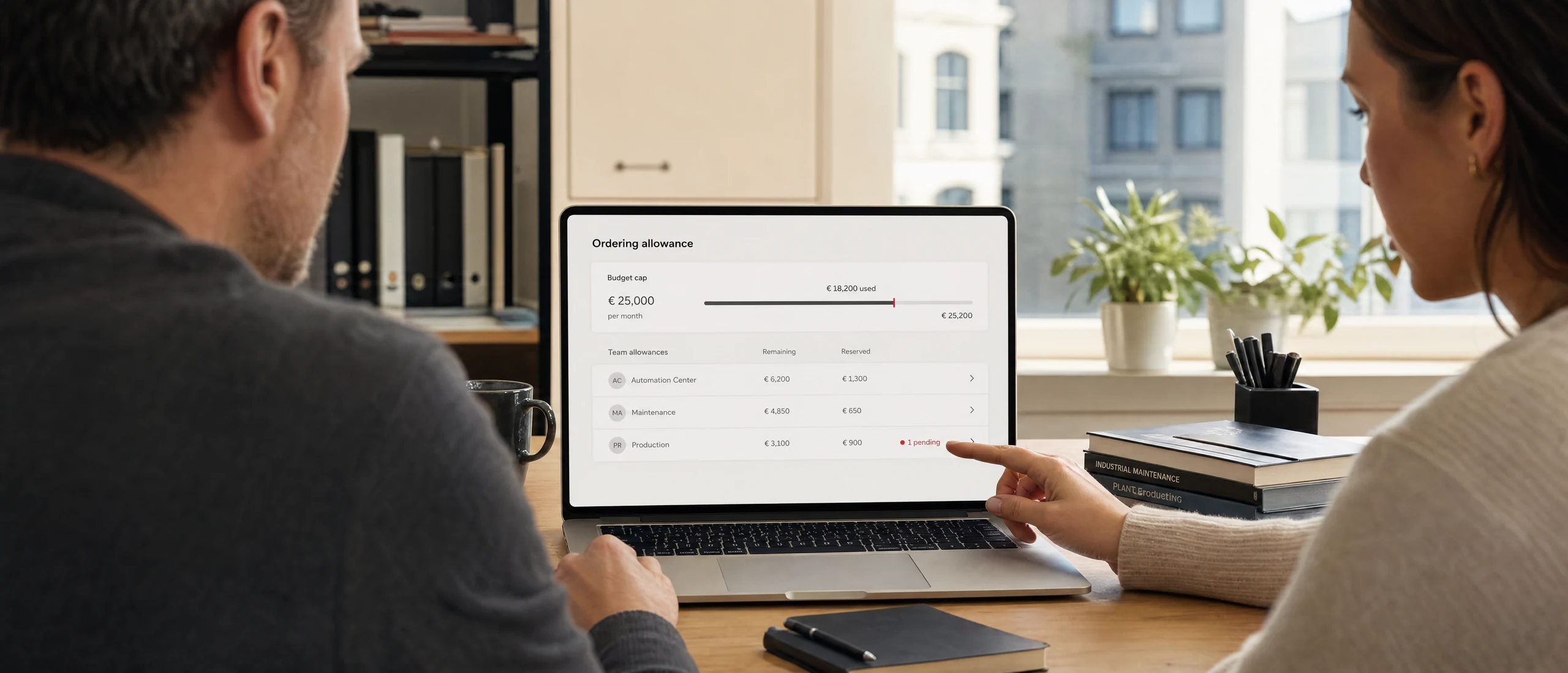
In marketing operations, many goods are deliberately scarce: VIP tickets, limited fan merchandise, campaign displays, budget pools per region. Quota allocation distributes them fairly across sales partners and locations, keeps budgets controllable and makes remaining quantities plannable — in the closed order shop as much as on match day.
Example: ten locations share 1,000 campaign kits. An allowance of 80 kits per location reserves 800 kits, leaving 200 centrally. Allocation assigns these quantities. When one location orders 30 kits, its remaining allowance is 50. An additional allocation from the reserve requires the agreed approval.
Every allotment is booked, every drawdown traceable.
Anyone planning quotas almost always works with these concepts:
For anything deliberately scarce: VIP tickets, limited fan merchandise, campaign displays, promotional products and budget pools per region. Quota allocation distributes these goods on a rule basis across sales partners and locations, instead of leaving it to order sequence.
Every dealer, location or guest receives a fixed quota instead of open ordering. Allotment, drawdown and remaining quantities are managed systemically — in the closed order shop, permissions and quotas are stored per user group.
In the system, not in a spreadsheet: every allotment is booked, every drawdown traceable. Bookings run in real time in the proprietary system PROWERB CORE, so remaining quantities stay plannable at any time.
Yes. Prowerb operates the hospitality chain for Coca-Cola from ticket request through quota allotment to accreditation. The person-specific clearance within a quota — guest names, access, proof — is part of the process.
Yes. In the example, each dealer initially receives an allowance of 80 kits. After ordering 30, its remaining allowance is 50. Periods, additional allocations and approvals are agreed before launch; the service page explains portal operations.
In the non-binding Needs Check: in under 60 seconds, we clarify which goods are scarce, who is allowed to allot, and how drawdowns should run. After that, a dedicated contact supports you instead of a call center.
