Replatforming refers to migrating an online shop or order portal to a new shop system — for example from PrestaShop to Magento. Unlike a relaunch, it affects the technical foundation: product master data, order processes, interfaces and integrations are transferred while the business is intended to keep running.
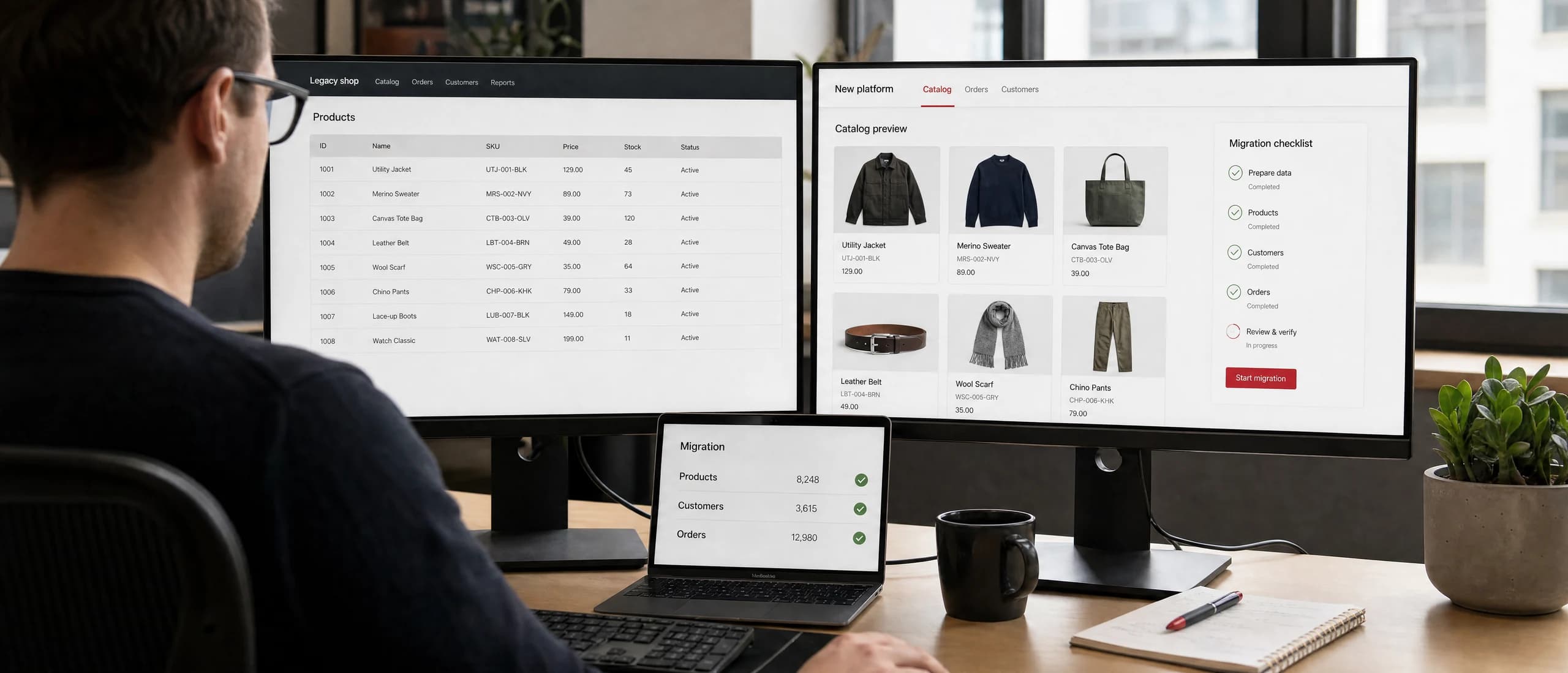
Companies switch when license costs, missing interfaces, or expiring support slow down operations. What's critical is rarely design and interface, but product master data, order history, and the connection to ERP and warehouse. Migrate only the frontend, and you lose processes. And the shop keeps selling during the migration — every day of downtime costs orders.
Prowerb doesn't just rebuild shops — it operates them afterward. Article lifecycle, order-to-cash, and the fulfillment behind the shop continue to run under the same roof.
The process starts with a review of data and interfaces. A test migration checks that items, orders and mappings arrive completely. The responsible teams then accept the order and shipping scenarios. Outstanding changes are reconciled at the agreed cutover; the fallback route and contacts are established beforehand.
A migration is the beginning, not the end of the project. These services follow directly on:
That is the goal of replatforming: the assortment and sales are intended to keep running while the technical foundation changes.
A relaunch affects design and interface; replatforming affects the technical foundation: product master data, order processes, interfaces, and integrations are transferred to a new shop system. The frontend is rarely the critical part.
In the data, not the frontend: product master data, order history, and the connection to ERP and warehouse decide success. Migrate only the frontend, and you lose processes — and every day of downtime costs orders.
Yes. At Prowerb, replatforming is not a one-off project: Magento, Shopify, and JTL shops are built and run on an ongoing basis as a managed service — including article lifecycle, order-to-cash, and the fulfillment behind the shop, under the same roof.
ERP, warehouse, and partners — through EDI and system integration up to continuous order and dispatch workflows, including the connection of the logistics partner. This part of the migration is exactly what decides success.
With a non-binding Needs Check in under 60 seconds: current shop system, interfaces, countries, timeframe. A dedicated contact then accompanies the project — no call center.
